Featured partner
Recommended for Cobham

ROAVR Group
Tree, ecology, flood risk and topographical surveys for planning applications.
4.9 Google rating
Get a quote
Local experts.
Featured partner
Recommended for Cobham
Tree, ecology, flood risk and topographical surveys for planning applications.
4.9 Google rating
Local experts.
Independent ecology consultancy with its head office in Leatherhead, Surrey.
Environmental consultancy founded in 2004, with its head office on the Surrey Research…
Multi-disciplinary practice founded in 1985, offering arboriculture, ecology, landscape…
Independent ecological consultancy with a Surrey office near Farnham, plus offices in…
A bat survey in Cobham is often needed where older buildings, trees or structures in the Cobham Conservation Area or around the Painshill Park could support roosts. Elmbridge Borough Council is the local planning authority. The parkland, lake and gardens, and plots in the conservation area, can support bats, nesting birds and other protected species. Surveys should follow current best practice, and roosts are protected by law. Buildings, trees and structures should be assessed for roost potential before any demolition, conversion or significant lighting is proposed. Confirm the current validation requirements with the council before submitting.
Local planning authority: Elmbridge Borough Council
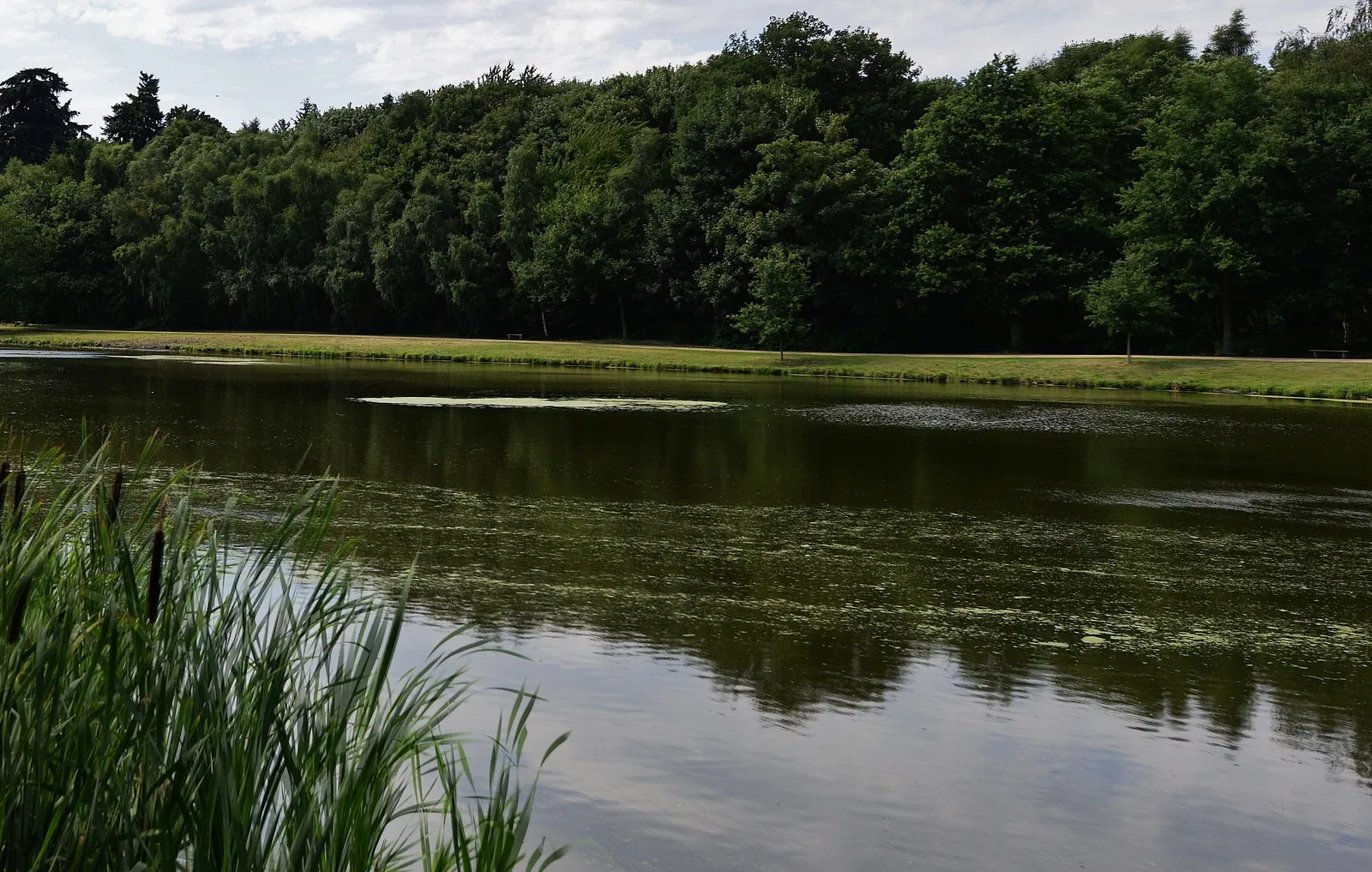
Cobham is in the area of Elmbridge Borough Council. Cobham is an Elmbridge town with its own historic High Street and the Grade I landscape of Painshill Park, quite unlike Esher's common and town-centre conservation area. The Cobham Conservation Area and the Painshill Park are the official features that shape survey work here. Surrey County Council is the Lead Local Flood Authority. From 1 April 2027 planning powers pass to the new East Surrey unitary council under local government reorganisation.
In Cobham, including around Cobham Conservation Area and Painshill Park, the same adopted local plan policies apply. Elmbridge Borough Council assesses effects on bats under Policy DM21 of the Development Management Plan, adopted on 15 April 2015, and Policy CS15 of the Core Strategy, adopted on 20 July 2011. Surveys should follow current best practice. Confirm the current local validation requirements with the council before submitting. Confirm the current validation requirements with the council before submitting.
Local plan: Elmbridge Core Strategy (adopted 20 July 2011) and Development Management Plan (adopted 15 April 2015) (The Core Strategy was adopted on 20 July 2011 and the Development Management Plan on 15 April 2015. These remain the adopted development plan as of 13 November 2026. A previous draft Local Plan was withdrawn from examination in 2025 after the inspector indicated it would be found unsound. A new Local Plan is at scoping consultation (4 November to 9 December 2026), with adoption scheduled for 16 August 2029; it is not adopted. The Core Strategy plan period runs to July 2026, but the adopted policies remain in force until replaced. Under local government reorganisation, plan-making passes to the new East Surrey unitary council on 1 April 2027.)
CS15: Biodiversity
Seeks to avoid loss and contribute to a net gain in biodiversity. The policy protects designated sites, including those relevant to the Thames Basin Heaths SPA and the South West London Waterbodies SPA, protects woodland including ancient woodland, and protects priority habitats and species. Clause 8 requires that new development does not result in a net loss of biodiversity and, where feasible, contributes to a net gain through the incorporation of biodiversity features. It does not set a percentage. National sites named in the reasoned justification include Esher Common SSSI.
DM21: Nature conservation and biodiversity
Expects all new development to preserve, manage and where possible enhance existing habitats, protected species and biodiversity features, in accordance with Core Strategy Policy CS15. Support is given to proposals that incorporate new biodiversity features. Development affecting internationally designated sites is considered against Policies CS13 and CS15 and relevant legislation. Development affecting nationally designated sites will not be permitted if it would have an adverse effect, except in exceptional circumstances where the benefits clearly outweigh the harm, with avoidance, mitigation and compensation sought. Significant harm to locally designated sites or to priority habitats and species will not be permitted. Potential SANG sites identified on the Policies Map are protected from development that would compromise that function. The presumption in favour of sustainable development does not apply to development affecting international sites.
DM6: Landscape and trees
Requires development to include an integral scheme of landscape, tree retention, protection and/or planting that reflects or enhances the existing landscape, contributes to biodiversity, and does not result in the loss of or damage to significant trees and hedgerows unless, in exceptional circumstances, the benefits would outweigh the loss. Existing trees, including their root systems, must be adequately protected before, during and after construction. Loss or deterioration of irreplaceable habitats, including ancient woodland and ancient or veteran trees, is not accepted unless, in exceptional circumstances, the benefits would outweigh the loss. The policy also covers works to trees protected by a Tree Preservation Order.
CS26: Flooding
Requires development to be located, designed and laid out so that it is safe, flood risk is minimised and risk is not increased elsewhere, with residual risks safely managed. Permission is only granted where a sequential test shows the site is in the lowest appropriate flood risk zone in accordance with national policy and the Elmbridge Strategic Flood Risk Assessment, and where development would not constrain the natural function of the flood plain. Development in Flood Zones 2 or 3 requires flood resistance and resilience measures. New development must include SuDS; all development in Flood Zones 2 and 3 must control surface water runoff at greenfield rates as near to source as possible. The policy covers both fluvial and surface water flooding and takes account of climate change. Reasoned justification records comprehensive flood defence and alleviation works along the River Mole after the 1968 floods, and residual risk behind Lower Mole defences.
CS13: Thames Basin Heaths Special Protection Area
Requires new residential development likely to have a significant effect on the Thames Basin Heaths SPA to demonstrate adequate avoidance or mitigation, agreed with Natural England. A 5 km zone of influence applies, with a 400 m exclusion zone where mitigation is unlikely to protect the integrity of the SPA. Outside the exclusion zone but within 5 km, mitigation is required prior to occupation and in perpetuity, based on access management and Suitable Accessible Natural Greenspace. Applicants should check current mapping for a specific site rather than assume a town centre falls inside the zone.
General guidance for bat survey, not formal advice for your site.
Elmbridge Borough Council. From 1 April 2027 planning powers pass to the new East Surrey unitary council under local government reorganisation. Surrey County Council is the Lead Local Flood Authority.
A bat survey is often needed where older buildings, trees or structures in the Cobham Conservation Area or around the Painshill Park could support roosts. Confirm the current validation requirements with the council.
Elmbridge Borough Council assesses effects under the adopted local plan, and bats and their roosts are also protected by the Conservation of Habitats and Species Regulations.