Featured partner
Recommended for Barking

ROAVR Group
Tree, ecology, flood risk and topographical surveys for planning applications.
4.9 Google rating
Get a quote
Local experts.
Featured partner
Recommended for Barking
Tree, ecology, flood risk and topographical surveys for planning applications.
4.9 Google rating
Local experts.
Arboricultural and ecological consultancy trading as Tim Moya Associates from 2 The…
Environmental and ecology consultancy with a London office at Holyrood Street, near…
London environmental consultancy based at Marshalsea Road, Southwark, formerly trading…
Environmental consultancy founded in 2004, with its head office on the Surrey Research…
Abbey Green, Barking Abbey and the River Roding form an important part of the setting for a biodiversity net gain assessment in Barking. The assessment uses the statutory metric to show how a proposal will secure a measurable gain. The local planning authority is the London Borough of Barking and Dagenham. Policy DMNE 2 of the Barking and Dagenham Local Plan 2020–2037, adopted on 18 September 2024, requires development to demonstrate a minimum of 10 per cent biodiversity net gain. That restates the statutory minimum and does not set a higher local percentage. After the National Planning Policy Framework published on 17 August 2026, qualifying applications are assessed against the statutory 10 per cent minimum except on a justified site allocation. Policy G6 of the London Plan, published on 2 March 2021, also forms part of the development plan.
Local planning authority: London Borough of Barking and Dagenham
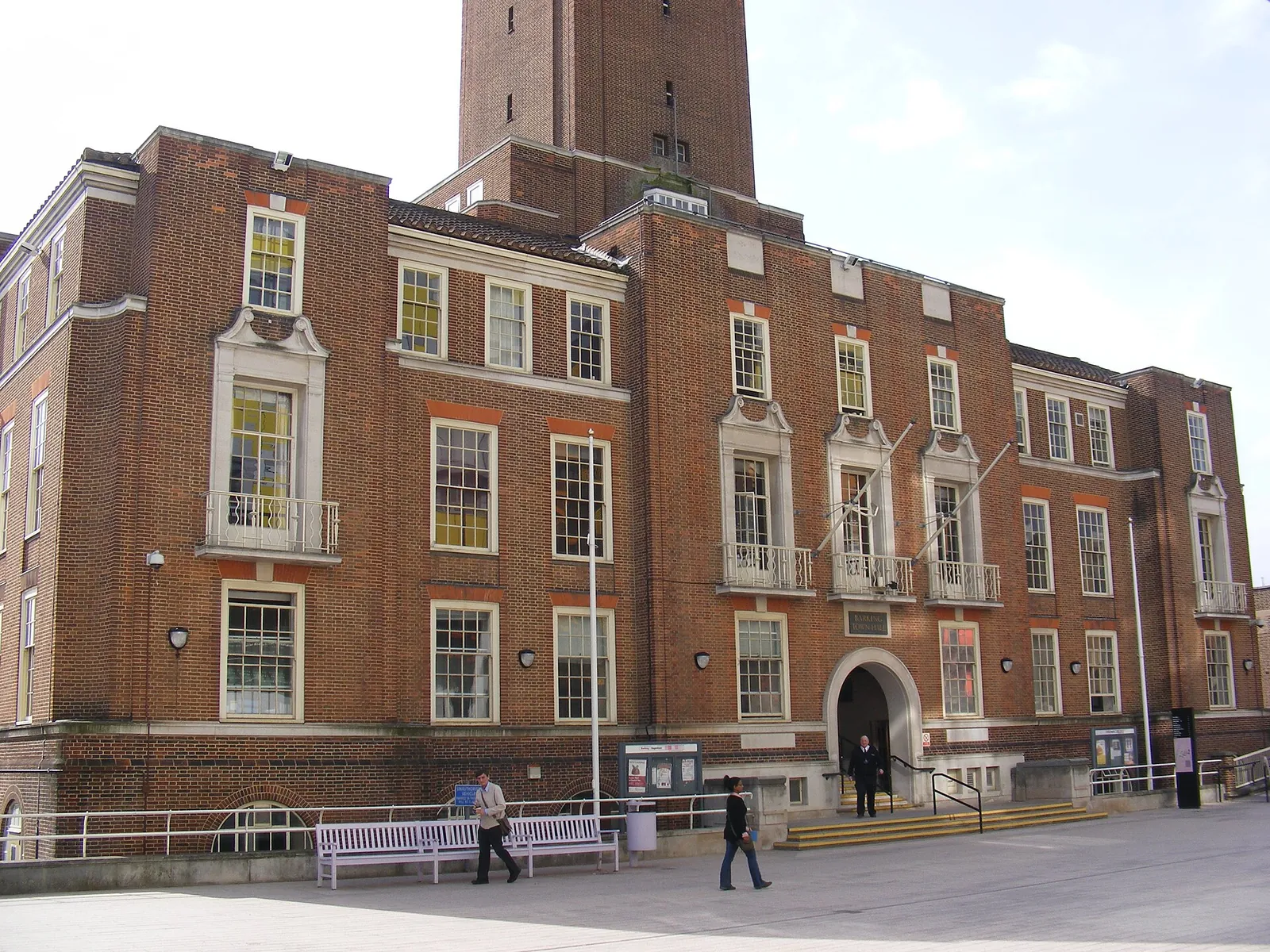
A net gain assessment in Barking Town Centre should be read alongside any appraisal of Abbey Green, Barking Abbey, the River Roding and Barking Creek. Policy SP6 sets the strategic approach to green and blue infrastructure. Dagenham Heathway is an area covered on these pages. The Thames lies at the south of the borough, rather than through the Broadway.
The London Borough of Barking and Dagenham assesses biodiversity net gain under Policy DMNE 2 of the Barking and Dagenham Local Plan 2020–2037, adopted on 18 September 2024, together with Policy DMNE 3, the Environment Act 2021 and Policy G6 of the London Plan, published on 2 March 2021. Policy DMNE 2 requires a minimum of 10 per cent, which is the statutory minimum rather than a higher local standard. The February 2026 FULL validation checklist asks applications to show how a 10 per cent gain will be achieved unless an exemption applies. Confirm the current local validation requirements with the council before submitting.
Local plan: Barking and Dagenham Local Plan 2020–2037 (The Barking and Dagenham Local Plan 2020–2037 was adopted on 18 September 2024 and is the adopted local plan. The London Plan, published on 2 March 2021, also forms part of the development plan. There is no 2027 successor council for this borough.)
DMNE 5: Trees
Policy DMNE 5 of the Barking and Dagenham Local Plan 2020–2037, adopted on 18 September 2024, sets out how development should protect and manage trees.
DMNE 2: Urban greening
Policy DMNE 2 requires development to demonstrate a minimum of 10 per cent biodiversity net gain. That restates the statutory minimum and does not set a higher local percentage. It also addresses urban greening.
DMNE 3: Nature conservation and biodiversity
Policy DMNE 3 protects nature conservation and biodiversity, including designated sites and habitats.
SP6: Green and blue infrastructure
Policy SP6 sets the strategic approach to green and blue infrastructure in the borough.
DMSI 6: Flood risk and defences
Policy DMSI 6 requires development to manage flood risk and to take account of flood defences.
DMSI 7: Water management
Policy DMSI 7 addresses water management, including sustainable drainage.
General guidance for biodiversity net gain (bng), not formal advice for your site.
The London Borough of Barking and Dagenham. The London Plan also forms part of the development plan. The borough is the Lead Local Flood Authority. There is no 2027 successor council for this borough.
No. Policy DMNE 2 requires a minimum of 10 per cent biodiversity net gain, which restates the statutory minimum. Qualifying applications are assessed against that 10 per cent minimum except on a justified site allocation.
Yes. The London Plan, published on 2 March 2021, forms part of the development plan. Policy G6 requires development to manage impacts on biodiversity and to aim for a net gain.
No other published town guides for this survey in the council area yet.