Featured partner
Recommended for Canary Wharf

ROAVR Group
Tree, ecology, flood risk and topographical surveys for planning applications.
4.9 Google rating
Get a quote
Local experts.
Featured partner
Recommended for Canary Wharf
Tree, ecology, flood risk and topographical surveys for planning applications.
4.9 Google rating
Local experts.
Environmental and ecology consultancy with a London office at Holyrood Street, near…
London environmental consultancy based at Marshalsea Road, Southwark, formerly trading…
London-based ecological consultancy in Muswell Hill.
Environmental consultancy founded in 2004, with its head office on the Surrey Research…
The River Thames, the West India Docks and planting around One Canada Square form part of the setting for a biodiversity net gain assessment at Canary Wharf on the Isle of Dogs. The assessment uses the statutory metric to show how a proposal will secure a measurable gain. The local planning authority is the London Borough of Tower Hamlets. Policy D.ES3 of the Tower Hamlets Local Plan 2031, adopted on 15 January 2020, addresses urban greening and biodiversity, including net gain, but it does not set a percentage above the national minimum. After the National Planning Policy Framework published on 17 August 2026, qualifying applications are assessed against the statutory 10 per cent minimum except on a justified site allocation. Policy G6 of the London Plan, published on 2 March 2021, also forms part of the development plan.
Local planning authority: London Borough of Tower Hamlets
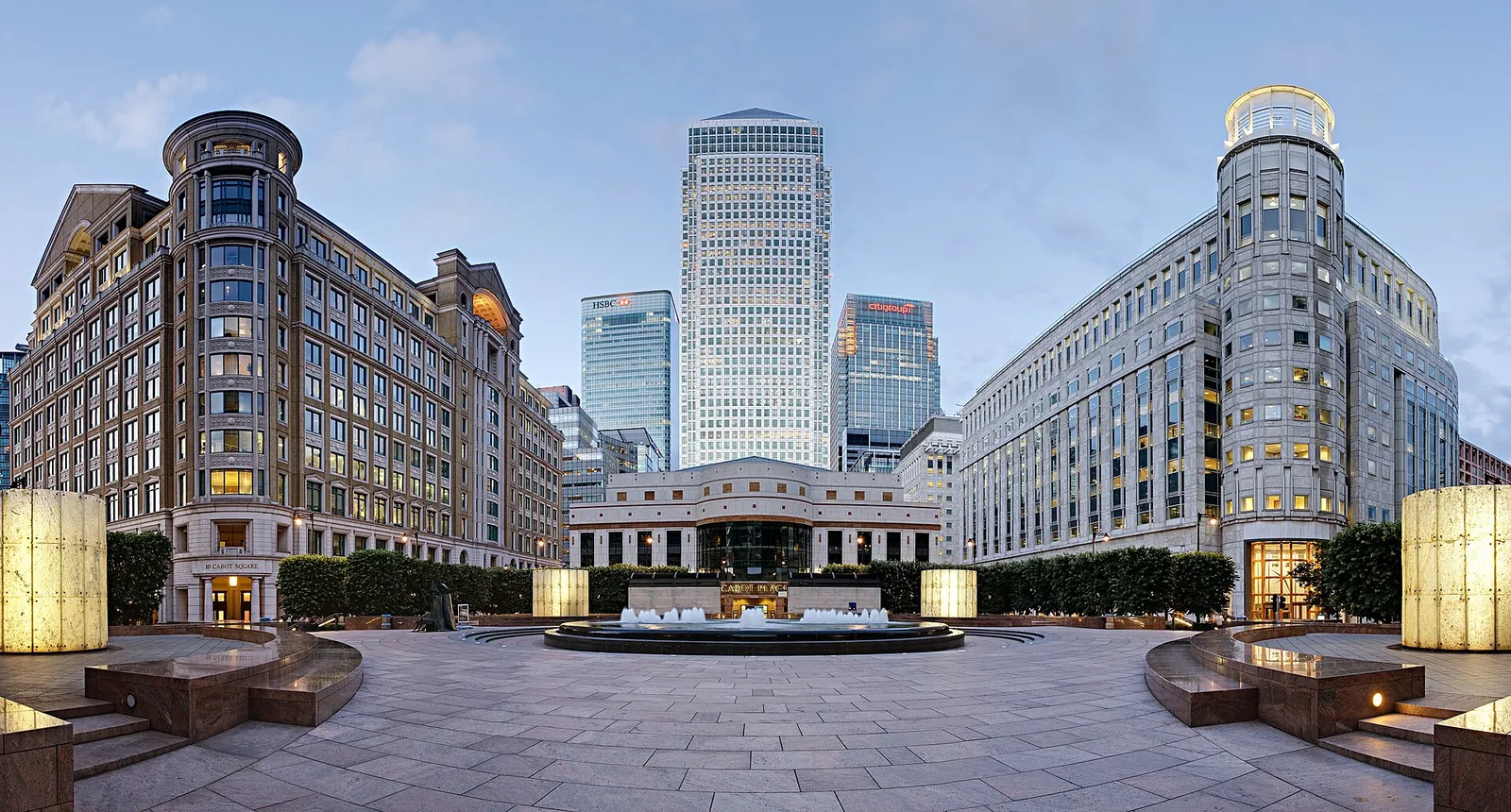
A net gain assessment at Canary Wharf should be read alongside any appraisal of One Canada Square, the West India Docks, the River Thames and the wider Isle of Dogs. Whitechapel, Bethnal Green and Chrisp Street are areas covered on these pages.
The London Borough of Tower Hamlets assesses biodiversity net gain under Policy D.ES3 of the Tower Hamlets Local Plan 2031, adopted on 15 January 2020, together with the Environment Act 2021 and Policy G6 of the London Plan, published on 2 March 2021. Policy D.ES3 does not set a local percentage above 10 per cent, so the statutory minimum applies except on a justified site allocation. Confirm the current local validation requirements with the council before submitting.
Local plan: Tower Hamlets Local Plan 2031: Managing Growth and Sharing Benefits (The Tower Hamlets Local Plan 2031: Managing Growth and Sharing Benefits was adopted on 15 January 2020 and remains the adopted local plan. The London Plan, published on 2 March 2021, also forms part of the development plan. There is no 2027 successor council for this borough.)
D.ES3: Urban greening and biodiversity
Policy D.ES3 of the Tower Hamlets Local Plan 2031, adopted on 15 January 2020, addresses urban greening and biodiversity, including trees and net gain. It does not set a biodiversity net gain percentage above the national minimum.
D.ES4: Flood risk
Policy D.ES4 addresses flood risk, including residual tidal risk behind the Thames Barrier and flood defences on the Isle of Dogs.
D.ES5: Sustainable drainage
Policy D.ES5 requires sustainable drainage in new development.
General guidance for biodiversity net gain (bng), not formal advice for your site.
The London Borough of Tower Hamlets. The London Plan also forms part of the development plan. The borough is the Lead Local Flood Authority. There is no 2027 successor council for this borough.
No. Policy D.ES3 addresses net gain but does not set a local percentage above the national minimum, so qualifying applications are assessed against the statutory 10 per cent minimum except on a justified site allocation.
Yes. The London Plan, published on 2 March 2021, forms part of the development plan. Policy G6 requires development to manage impacts on biodiversity and to aim for a net gain.
No other published town guides for this survey in the council area yet.