Featured partner
Recommended for Kingston upon Thames

ROAVR Group
Tree, ecology, flood risk and topographical surveys for planning applications.
4.9 Google rating
Get a quote
Local experts.
Featured partner
Recommended for Kingston upon Thames
Tree, ecology, flood risk and topographical surveys for planning applications.
4.9 Google rating
Local experts.
Independent ecology consultancy with its head office in Leatherhead, Surrey.
Environmental consultancy founded in 2004, with its head office on the Surrey Research…
Multi-disciplinary practice founded in 1985, offering arboriculture, ecology, landscape…
Independent ecological consultancy with a Surrey office near Farnham, plus offices in…
The River Thames, River Hogsmill and Hogsmill Valley are important parts of the setting for a biodiversity net gain assessment in Kingston upon Thames. The assessment uses the statutory metric to show how a proposal will leave habitats in a measurably better state. The local planning authority is the Royal Borough of Kingston upon Thames. Policy DM 6 of the Core Strategy, adopted on 17 April 2012, requires no net loss of biodiversity and, where appropriate, new or improved habitats, but it does not set a percentage. Policy G6 of the London Plan, published on 2 March 2021, which also forms part of the development plan, aims to secure net biodiversity gain without setting a figure. These drafts apply the statutory minimum of 10 per cent under the Environment Act 2021, unless a scheme is exempt.
Local planning authority: Royal Borough of Kingston upon Thames
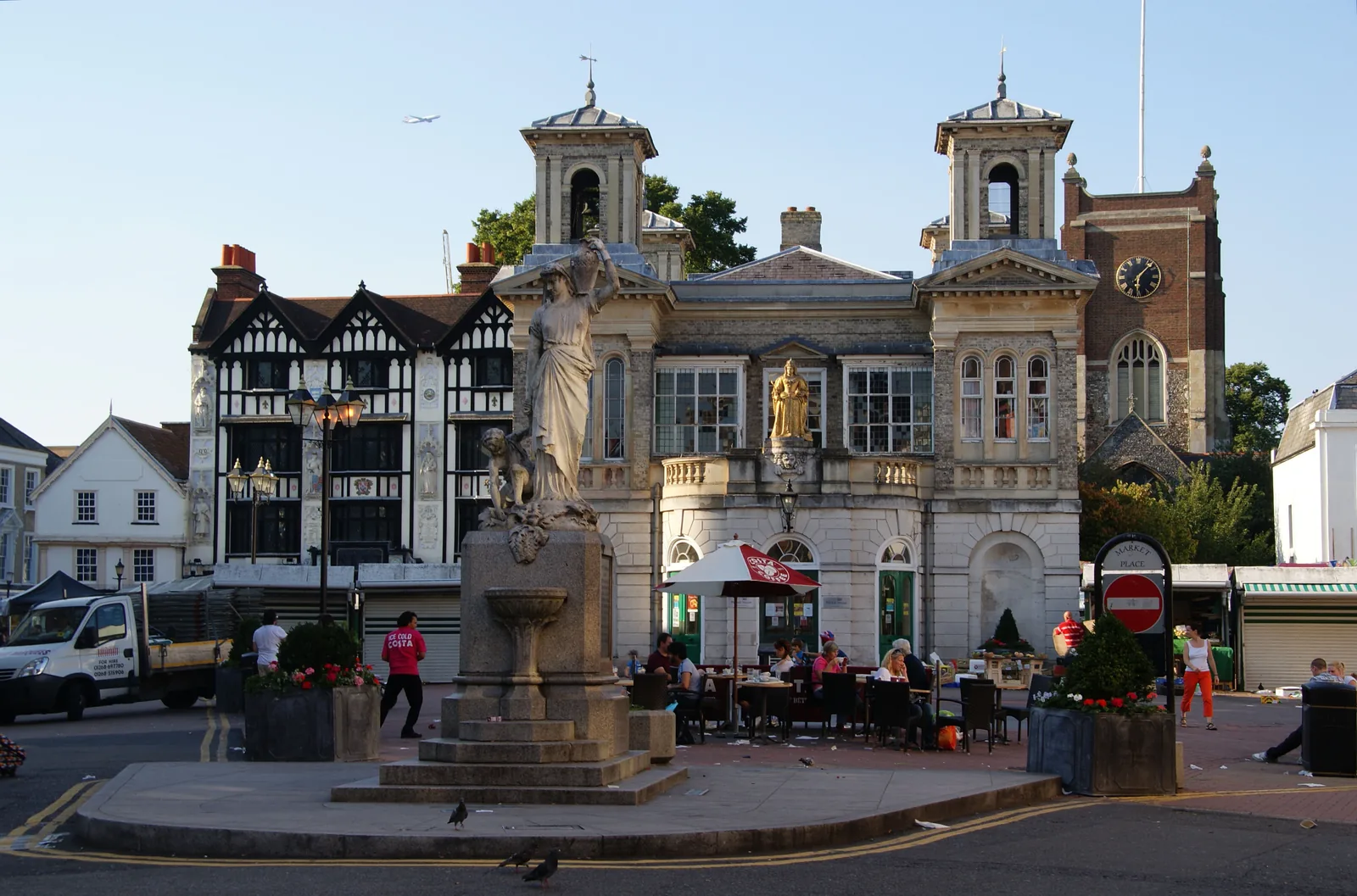
The River Thames, River Hogsmill, Hogsmill Valley and the Thames Policy Area are the main habitat corridors in and next to Kingston Town Centre. Policy DM 6 also requires an ecological assessment for major development or where there is significant habitat. A new borough Local Plan is only at Regulation 19 and is not used for a local percentage.
The Royal Borough of Kingston upon Thames applies the statutory biodiversity net gain duty under the Environment Act 2021, which requires a minimum 10 per cent gain for qualifying development, together with Policy DM 6 of the Core Strategy, adopted on 17 April 2012, and Policy G6 of the London Plan, published on 2 March 2021. Those adopted policies seek no net loss or net gain but do not set a higher local percentage. Confirm the current validation requirements with the council before submitting.
Local plan: Royal Borough of Kingston upon Thames Core Strategy (adopted 17 April 2012) and The London Plan 2021 (published 2 March 2021) (The Core Strategy was adopted on 17 April 2012 and remains the adopted borough development plan as of 13 November 2026, together with the Kingston Town Centre Area Action Plan (K+20, 2008) until it is replaced. The London Plan 2021, published on 2 March 2021, also forms part of the development plan. A new Kingston Local Plan 2028-2043 reached Regulation 19 consultation in 2026 and is not adopted. The draft London Plan 2026 is in consultation and is not adopted. There is no 2027 successor council. The Royal Borough of Kingston upon Thames is the local planning authority and the Lead Local Flood Authority.)
SI 12: Flood risk management
Requires development proposals to minimise and mitigate flood risk and address residual risk, including, where possible, making space for water and setting development back from watercourses. In London the boroughs are the Lead Local Flood Authorities.
DM 10: Design Requirements for New Developments
Requires new development to apply good design, including a tree test: trees that are important to character, or are protected by a Tree Preservation Order, must not be adversely affected. Where trees are lost, the council will normally require two replacement specimens for each tree lost, and will refuse permission if the leafy character of the area would be harmed without commensurate replacement.
DM 6: Biodiversity
Requires development to protect and promote biodiversity. An ecological assessment is required for major development or where there is significant habitat. Proposals should not result in a net loss of biodiversity and, where appropriate, should include new or improved habitats. The policy does not set a percentage. Statutory 10 per cent biodiversity net gain under the Environment Act 2021 applies to qualifying development.
G6: Biodiversity and access to nature
London Plan Policy G6 requires development proposals to manage impacts on biodiversity and aim to secure net biodiversity gain. Sites of Importance for Nature Conservation should be protected. The policy does not set a percentage.
G7: Trees and woodlands
Requires existing trees of value to be retained wherever possible. Where trees are removed, there should be adequate replacement based on the value of the benefits lost, determined by a method such as i-Tree or CAVAT. Additional planting, particularly of large-canopied species, should generally be included.
DM 4: Water Management and Flood Risk
Requires a flood risk assessment for all development in Flood Zones 2 and 3 and for major development of 1 hectare or more in Flood Zone 1, considering all sources of flooding, climate change and the Strategic Flood Risk Assessment. Sustainable drainage should be used unless it is not feasible, following the Mayor's drainage hierarchy, and sewer capacity should be considered. The borough is the Lead Local Flood Authority under the Flood and Water Management Act 2010.
General guidance for biodiversity net gain (bng), not formal advice for your site.
The Royal Borough of Kingston upon Thames. The London Plan also forms part of the development plan. The borough is the Lead Local Flood Authority. There is no 2027 successor council for this borough.
Yes, for qualifying applications. The council applies the statutory minimum of 10 per cent under the Environment Act 2021. Policy DM 6 and London Plan Policy G6 already seek no net loss or net gain but do not set a higher local percentage. Confirm the current validation requirements with the council.
No. The new Kingston Local Plan 2028-2043 is not adopted, and neither is the draft London Plan 2026. These drafts use the statutory 10 per cent duty.
No other published town guides for this survey in the council area yet.