Featured partner
Recommended for Woodbridge

ROAVR Group
Tree, ecology, flood risk and topographical surveys for planning applications.
4.9 Google rating
Get a quote
Local experts.
Featured partner
Recommended for Woodbridge
Tree, ecology, flood risk and topographical surveys for planning applications.
4.9 Google rating
Local experts.
The commercial ecology arm of Suffolk Wildlife Trust, whose own site publishes an office…
Ecological consultancy whose own site publishes an office at The Barn, Bridge Farm,…
Ecological consultancy whose own site publishes an office at 1 Red House Farm Cottages,…
Biodiversity net gain in Woodbridge is often needed where work could affect the Woodbridge Conservation Area, or the Deben Estuary. East Suffolk Council is the local planning authority. Policy SCLP10.1 requires a proportionate biodiversity net gain and protects irreplaceable habitats including ancient woodland and veteran trees. East Suffolk Council applies the statutory 10 per cent biodiversity net gain minimum. After the National Planning Policy Framework published on 17 August 2026, qualifying applications are assessed against the statutory 10 per cent minimum except on a justified site allocation. It is a Deben estuary market town around the official Woodbridge Conservation Area and the Deben Estuary, quite unlike Felixstowe, Lowestoft or Beccles. Confirm the current validation requirements with the council before submitting.
Local planning authority: East Suffolk Council
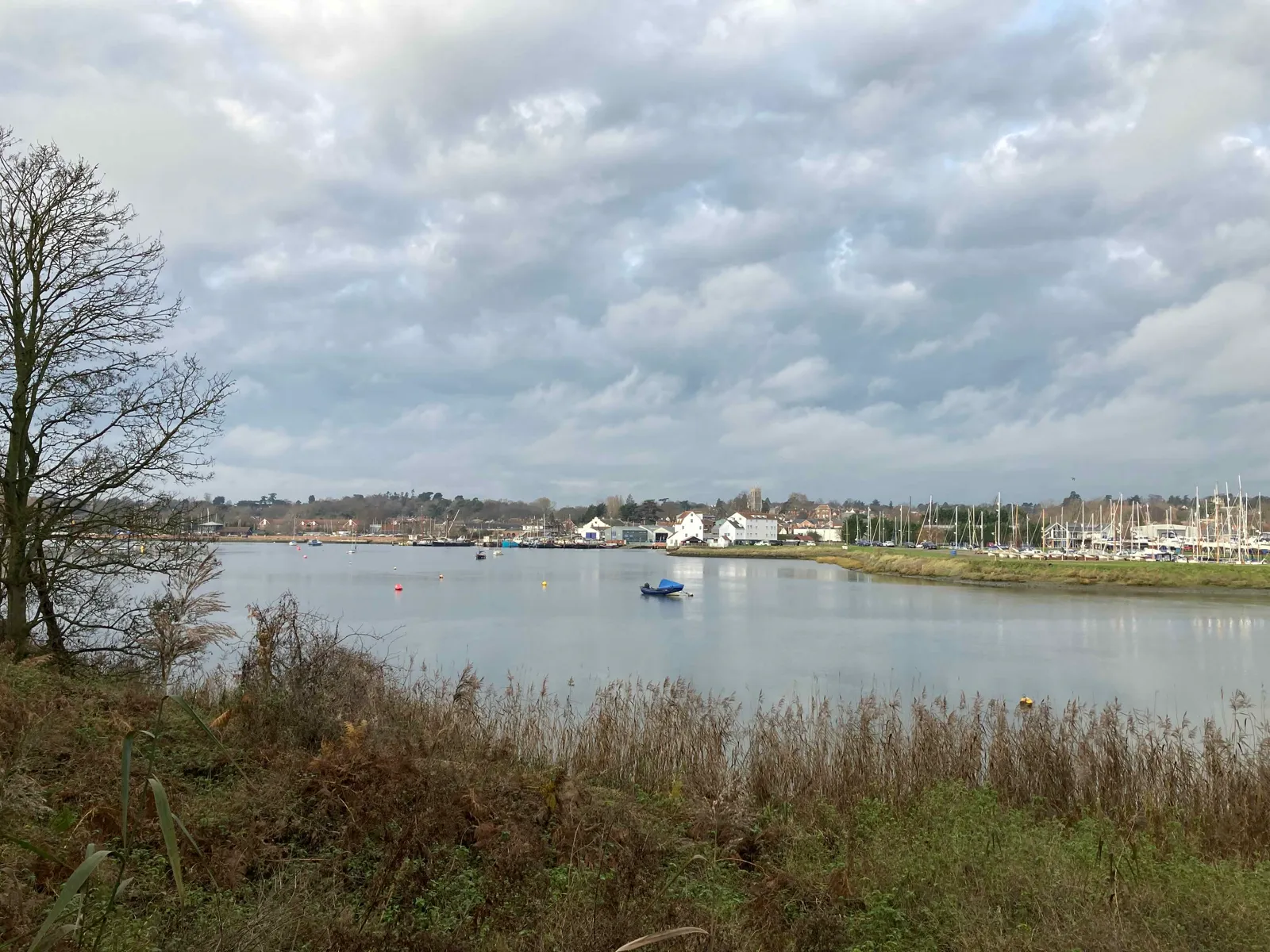
Woodbridge is in the area of East Suffolk Council. It is a Deben estuary market town around the official Woodbridge Conservation Area and the Deben Estuary, quite unlike Felixstowe, Lowestoft or Beccles. The adopted East Suffolk Council Suffolk Coastal Local Plan applies here. The Woodbridge Conservation Area and the Deben Estuary are the official features that shape biodiversity net gain work here. Suffolk County Council is the Lead Local Flood Authority. There is no confirmed successor council for East Suffolk.
In Woodbridge, including around the Woodbridge Conservation Area and at the Deben Estuary, the same adopted local plan policies apply. East Suffolk Council applies the statutory 10 per cent biodiversity net gain minimum. Policy SCLP10.1 (Biodiversity and Geodiversity) of the East Suffolk Council Suffolk Coastal Local Plan, adopted on 23 September 2020, requires development to maintain, restore or enhance biodiversity and geodiversity and to provide a biodiversity net gain that is proportionate to the scale and nature of the proposal. Development resulting in the loss or deterioration of irreplaceable habitats, including ancient woodland and veteran trees, will not be permitted unless there are wholly exceptional reasons and a suitable compensation strategy exists. The policy does not set a higher than statutory biodiversity net gain percentage. East Suffolk Council applies the statutory 10 per cent minimum. After the National Planning Policy Framework published on 17 August 2026, qualifying applications are assessed against the statutory 10 per cent minimum except on a justified site allocation. Confirm the current validation requirements with the council before submitting.
Local plan: East Suffolk Council Suffolk Coastal Local Plan and East Suffolk Council Waveney Local Plan (adopted)
SCLP10.1: Biodiversity and Geodiversity
Policy SCLP10.1 (Biodiversity and Geodiversity) of the East Suffolk Council Suffolk Coastal Local Plan, adopted on 23 September 2020, requires development to maintain, restore or enhance biodiversity and geodiversity and to provide a biodiversity net gain that is proportionate to the scale and nature of the proposal. Development resulting in the loss or deterioration of irreplaceable habitats, including ancient woodland and veteran trees, will not be permitted unless there are wholly exceptional reasons and a suitable compensation strategy exists. The policy does not set a higher than statutory biodiversity net gain percentage. East Suffolk Council applies the statutory 10 per cent minimum.
SCLP9.5: Flood Risk
Policy SCLP9.5 (Flood Risk) of the East Suffolk Council Suffolk Coastal Local Plan, adopted on 23 September 2020, provides that the Strategic Flood Risk Assessment should be the starting point in assessing whether a proposal is at risk from flooding. Proposals for new development, or the intensification of existing development, will not be permitted in areas at high risk from flooding, namely Flood Zones 2 and 3, unless the applicant has satisfied the safety requirements in national planning practice guidance, including the sequential test, where needed the exception test, and a site-specific flood risk assessment that addresses the characteristics of flooding and an appropriate range of flood event scenarios, taking climate change into account. Developments should be safe, resilient and should not increase flood risk elsewhere, and are encouraged to include natural flood management measures.
WLP8.34: Biodiversity and Geodiversity
Policy WLP8.34 (Biodiversity and Geodiversity) of the East Suffolk Council Waveney Local Plan, adopted on 20 March 2019, supports development where it can be demonstrated that it maintains, restores or enhances the existing green infrastructure network and positively contributes towards biodiversity through the creation of new green infrastructure and improvement to linkages between habitats, having regard to the Waveney Green Infrastructure Strategy (2015). Development proposals should be accompanied by sufficient information to assess the effects of development on protected sites, species, biodiversity or geology, together with any proposed prevention, mitigation or compensation measures. The policy does not set a higher than statutory biodiversity net gain percentage. East Suffolk Council applies the statutory 10 per cent minimum.
WLP8.24: Flood Risk
Policy WLP8.24 (Flood Risk) of the East Suffolk Council Waveney Local Plan, adopted on 20 March 2019, requires development proposals to consider flooding from all sources and take into account climate change. Proposals at risk of flooding should only be granted planning permission if it can be demonstrated that there are no available sites suitable for the proposed use in areas with a lower probability of flooding, that the development provides sustainability benefits which outweigh flood risk, and that a site-specific flood risk assessment demonstrates that the flood risk can be satisfactorily mitigated over the lifetime of the development. New residential development on sites not allocated in the Local Plan or a Neighbourhood Plan will not be permitted on sites at risk from flooding. Developments should use sustainable drainage systems to drain surface water.
General guidance for biodiversity net gain (bng), not formal advice for your site.
East Suffolk Council. Suffolk County Council is the Lead Local Flood Authority. There is no confirmed successor council for East Suffolk.
A biodiversity net gain assessment in Woodbridge is often needed where development could affect habitats in the Woodbridge Conservation Area or at the Deben Estuary. Confirm the current validation requirements with the council.
East Suffolk Council applies the statutory 10 per cent minimum. After the National Planning Policy Framework published on 17 August 2026, qualifying applications are assessed against that statutory minimum except on a justified site allocation. Confirm the current validation requirements with the council.