Featured partner
Recommended for Slough

ROAVR Group
Tree, ecology, flood risk and topographical surveys for planning applications.
4.9 Google rating
Get a quote
Local experts.
Featured partner
Recommended for Slough
Tree, ecology, flood risk and topographical surveys for planning applications.
4.9 Google rating
Local experts.
Transport planning and infrastructure consultancy with its main office on North Street…
Transport planning and infrastructure consultancy based at Lion House, Oriental Road in…
Flood risk consultancy based at Pyle Hill near Woking, on the northern edge of Guildford…
A flood risk assessment in Slough is often needed in the Upton Park/Upton Village Conservation Area or around the Sussex Place/Clifton Road Conservation Area, and on other sites at risk of flooding from rivers, the sea, surface water or other sources. Slough Borough Council is the local planning authority. Core Policy 8 permits development only where it is safe, with minimal flood risk to the property, and where it will not impede floodwaters, increase flood risk elsewhere or reduce floodplain capacity, and requires surface water to be managed sustainably. It is a dense Thames Valley industrial and commercial town immediately west of Greater London, quite unlike the royal parkland town of Windsor or the Kennet valley towns farther west. Confirm the current validation requirements with the council before submitting.
Local planning authority: Slough Borough Council
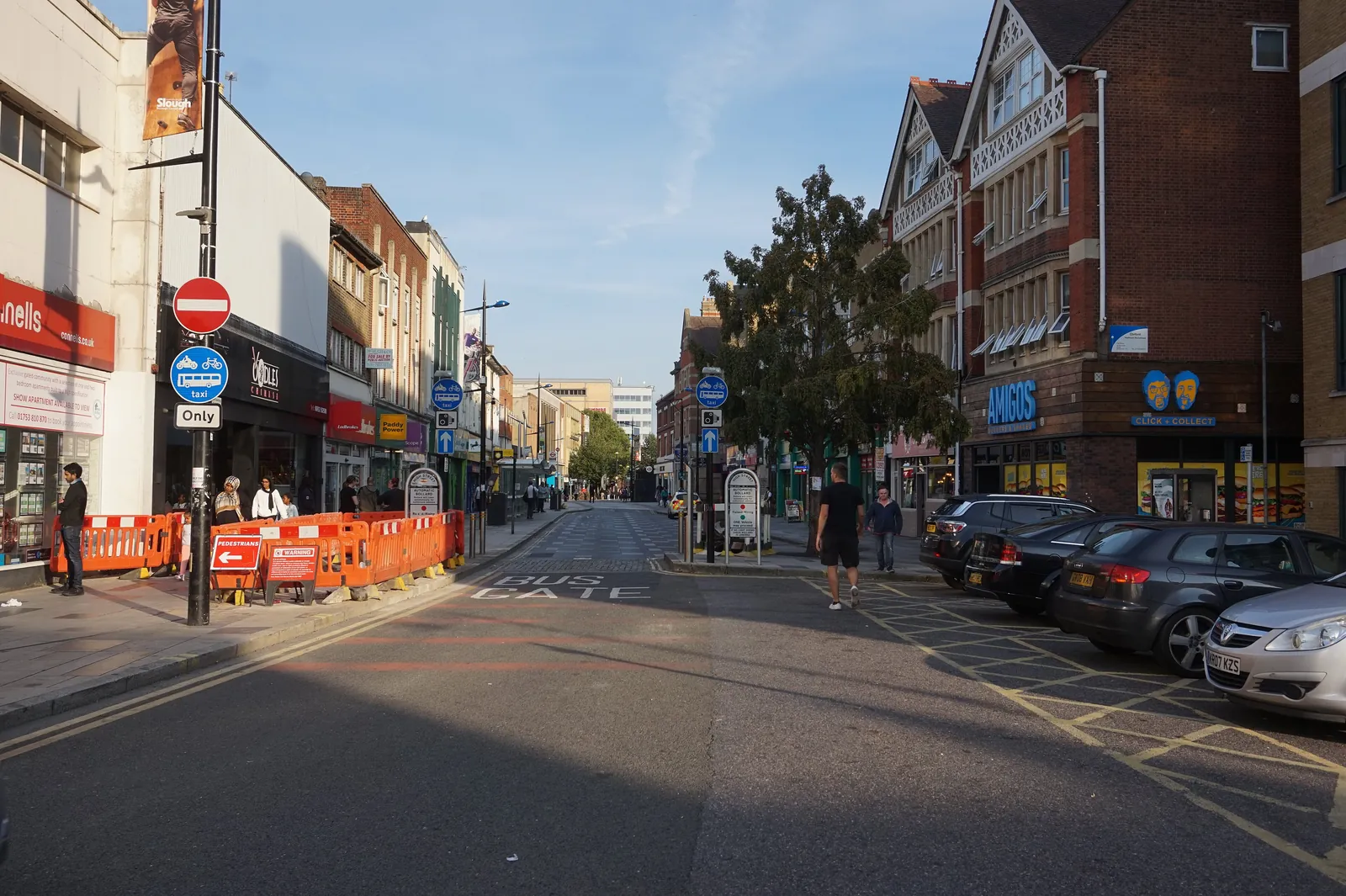
Slough is in the area of Slough Borough Council. It is a dense Thames Valley industrial and commercial town immediately west of Greater London, quite unlike the royal parkland town of Windsor or the Kennet valley towns farther west. The Upton Park/Upton Village Conservation Area and the Sussex Place/Clifton Road Conservation Area are the official features that shape flood risk and drainage work here. Slough Borough Council is also the Lead Local Flood Authority. There is no confirmed 2027 successor council for Berkshire.
In Slough, including around the Upton Park/Upton Village Conservation Area and around the Sussex Place/Clifton Road Conservation Area, the same adopted local plan policies apply. Slough Borough Council assesses flood risk and drainage under Core Policy 8 of the Slough Local Development Framework Core Strategy 2006–2026. Core Policy 8 permits development only where it is safe, with minimal flood risk to the property, and where it will not impede floodwaters, increase flood risk elsewhere or reduce floodplain capacity, and requires surface water to be managed sustainably. Confirm the current validation requirements with the council before submitting.
Local plan: Slough Local Development Framework Core Strategy 2006–2026 (The Slough Local Development Framework Core Strategy 2006–2026, adopted on 16 December 2008, is the statutory core strategy as of 15 November 2026. A later local plan had not been adopted as of that date.)
Core Policy 8: Sustainability and the Environment
Core Policy 8 (Sustainability and the Environment) says all development in the Borough shall be sustainable, of a high quality design, improve the quality of the environment and address the impact of climate change. On flooding, development will only be permitted where it is safe and it can be demonstrated that there is minimal risk of flooding to the property and it will not impede the flow of floodwaters, increase the risk of flooding elsewhere or reduce the capacity of a floodplain; and development must manage surface water arising from the site in a sustainable manner which will also reduce the risk of flooding and improve water quality. The policy also requires appropriate landscaping as an integral part of high quality design.
Core Policy 9: Natural and Built Environment
Core Policy 9 (Natural and Built Environment) says development will not be permitted unless it enhances and protects the historic environment; respects the character and distinctiveness of existing buildings, townscapes and landscapes and their local designations; protects and enhances the water environment and its margins; and enhances and preserves natural habitats and the biodiversity of the Borough, including corridors between biodiversity-rich features.
General guidance for flood risk and drainage assessment, not formal advice for your site.
Slough Borough Council. Slough Borough Council is also the Lead Local Flood Authority. There is no confirmed 2027 successor council for Berkshire.
A flood risk assessment in Slough is often needed in the Upton Park/Upton Village Conservation Area or around the Sussex Place/Clifton Road Conservation Area, and on other sites at risk of flooding from rivers, the sea, surface water or other sources. Confirm the current validation requirements with the council.
Core Policy 8 permits development only where it is safe, with minimal flood risk to the property, and where it will not impede floodwaters, increase flood risk elsewhere or reduce floodplain capacity, and requires surface water to be managed sustainably. Confirm the current validation requirements with the council.
No other published town guides for this survey in the council area yet.