Featured partner
Recommended for Dunstable

ROAVR Group
Tree, ecology, flood risk and topographical surveys for planning applications.
4.9 Google rating
Get a quote
Local experts.
Featured partner
Recommended for Dunstable
Tree, ecology, flood risk and topographical surveys for planning applications.
4.9 Google rating
Local experts.
Hitchin land and environmental consultancy with its head office at Maydencroft Manor,…
Ecological consultancy and CIEEM Registered Practice whose own site publishes a trading…
CIEEM registered ecological consultancy, now part of Pell Frischmann, whose own contact…
Ecological and environmental consultancy whose own contact page publishes a Milton…
A preliminary ecological appraisal in Dunstable is often needed where work could affect the Dunstable Conservation Area, or the Chilterns Area of Outstanding Natural Beauty. Central Bedfordshire Council is the local planning authority. Policy EE2 and Policy EE3 require a net gain in biodiversity and industry-standard ecological surveys. Central Bedfordshire Council applies the statutory 10 per cent biodiversity net gain minimum. It is a historic market town around the official Dunstable Conservation Area and the Chilterns Area of Outstanding Natural Beauty, quite unlike Leighton Buzzard, Biggleswade, Sandy or Houghton Regis. The adopted Central Bedfordshire Local Plan 2015 to 2035 applies here. Confirm the current validation requirements with the council before submitting.
Local planning authority: Central Bedfordshire Council
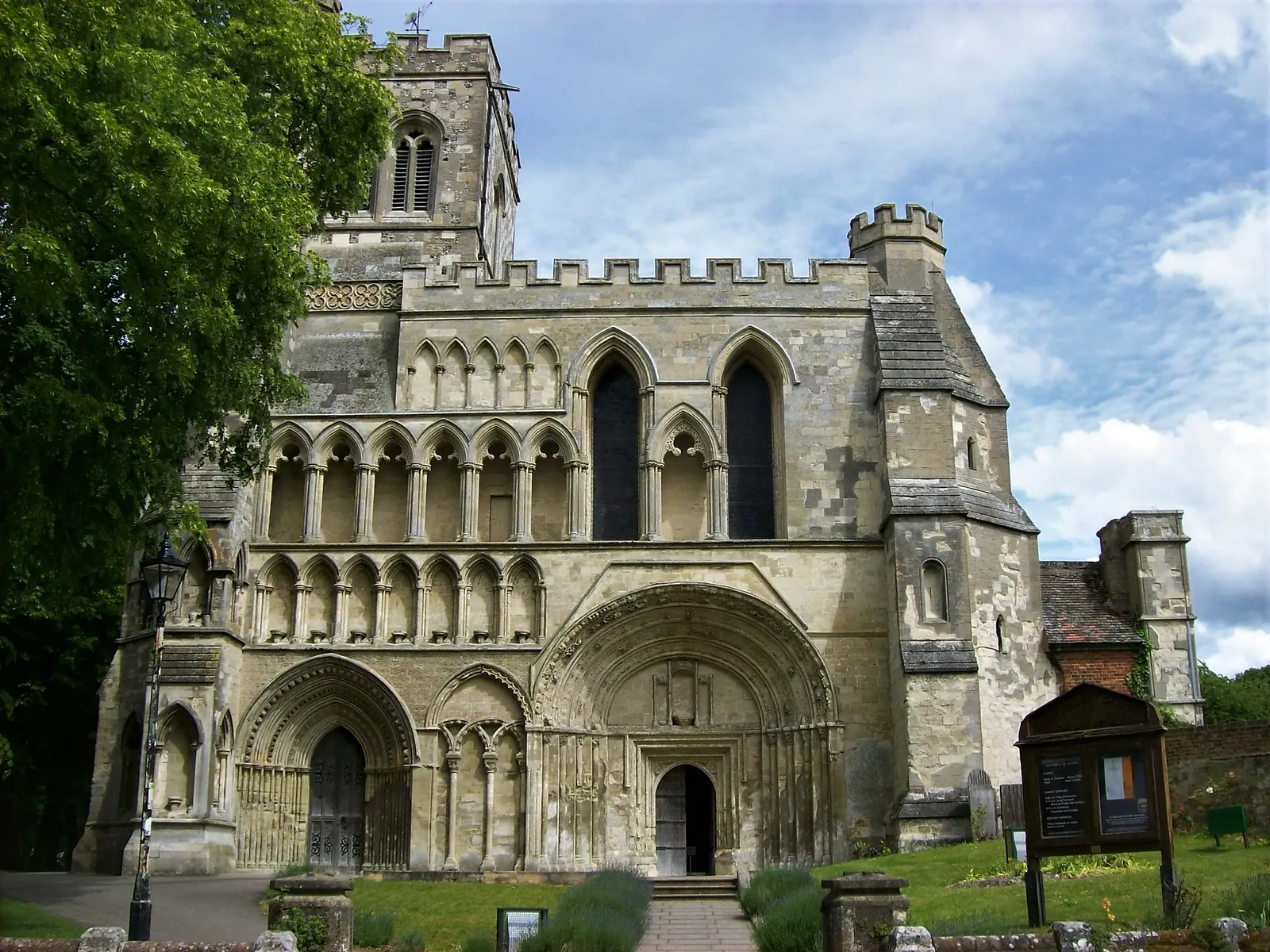
Dunstable is in the area of Central Bedfordshire Council. It is a historic market town around the official Dunstable Conservation Area and the Chilterns Area of Outstanding Natural Beauty, quite unlike Leighton Buzzard, Biggleswade, Sandy or Houghton Regis. The adopted Central Bedfordshire Local Plan 2015 to 2035 applies here. The Dunstable Conservation Area and the Chilterns Area of Outstanding Natural Beauty are the official features that shape preliminary ecological appraisal work here. Central Bedfordshire Council is the Lead Local Flood Authority. There is no confirmed successor council for Central Bedfordshire.
In Dunstable, including around the Dunstable Conservation Area and at the Chilterns Area of Outstanding Natural Beauty, the same adopted local plan policies apply. Central Bedfordshire Council assesses ecology under Policy EE2 of the Central Bedfordshire Local Plan 2015 to 2035. Policy EE2 (Enhancing Biodiversity) of the Central Bedfordshire Local Plan 2015 to 2035, adopted on 22 July 2021, provides that development proposals will be permitted where they provide a net gain in biodiversity through the conservation, restoration, enhancement and creation of ecological networks of habitats, species and sites. Proposals should avoid negative impacts on biodiversity and geodiversity; where this is not possible they must mitigate unavoidable impacts and, as a last resort, compensate for residual impacts, delivering a net gain in biodiversity. The policy does not set a higher than statutory biodiversity net gain percentage. Central Bedfordshire Council applies the statutory 10 per cent minimum. Confirm the current validation requirements with the council before submitting.
Local plan: Central Bedfordshire Local Plan 2015 to 2035 (adopted)
EE4: Trees, Woodlands and Hedgerows
Policy EE4 (Trees, Woodlands and Hedgerows) of the Central Bedfordshire Local Plan 2015 to 2035, adopted on 22 July 2021, provides that development proposals will be permitted where they do not adversely affect ancient woodland and aged and veteran trees; where woodlands, traditional orchards, hedgerows and specimen trees found outside woodlands are protected and buffered; where existing hedgerows and trees are incorporated to enhance developments; and where any removal of trees or hedgerows to accommodate development is justified and lost assets are replaced within the development site with appropriate planting of suitable species of equivalent scale and character, providing equivalent canopy cover and habitat connectivity.
EE2: Enhancing Biodiversity
Policy EE2 (Enhancing Biodiversity) of the Central Bedfordshire Local Plan 2015 to 2035, adopted on 22 July 2021, provides that development proposals will be permitted where they provide a net gain in biodiversity through the conservation, restoration, enhancement and creation of ecological networks of habitats, species and sites. Proposals should avoid negative impacts on biodiversity and geodiversity; where this is not possible they must mitigate unavoidable impacts and, as a last resort, compensate for residual impacts, delivering a net gain in biodiversity. The policy does not set a higher than statutory biodiversity net gain percentage. Central Bedfordshire Council applies the statutory 10 per cent minimum.
EE3: Nature Conservation
Policy EE3 (Nature Conservation) of the Central Bedfordshire Local Plan 2015 to 2035, adopted on 22 July 2021, requires up-to-date, comprehensive ecological surveys undertaken in accordance with industry guidelines and standards to support and inform development proposals that would affect sites for nature conservation, protected species, or species and habitats of principal importance, demonstrating that development will deliver a net gain. Proposals will be permitted where they do not have an adverse effect, either alone or in-combination, on European designated sites unless they satisfy the Habitats Regulations, will not adversely affect SSSIs, National Nature Reserves and Roadside Nature Reserves, and are designed to prevent any adverse impact on County Wildlife Sites, Local Nature Reserves, local geological or geomorphological sites, protected species, or species and habitats of principal importance. The policy does not set a higher than statutory biodiversity net gain percentage. Central Bedfordshire Council applies the statutory 10 per cent minimum.
CC3: Flood Risk Management
Policy CC3 (Flood Risk Management) of the Central Bedfordshire Local Plan 2015 to 2035, adopted on 22 July 2021, requires a site-specific Flood Risk Assessment for any site within 20 metres of any watercourse, including those not shown on the Environment Agency flood maps, or within an area at high risk of surface water flooding. Development will be supported where it is located in areas at lowest risk of flooding from all sources, the sequential and exception tests demonstrate that the site is appropriate, a sequential approach to site layout is applied, the development will be safe for its lifetime and will not increase flood risk elsewhere, and surface water runoff is managed to pre-development rates and volumes, giving priority to the use of SuDS.
General guidance for preliminary ecological appraisal (pea), not formal advice for your site.
Central Bedfordshire Council. Central Bedfordshire Council is the Lead Local Flood Authority. There is no confirmed successor council for Central Bedfordshire.
A preliminary ecological appraisal in Dunstable is often needed where development could affect habitats or species in the Dunstable Conservation Area or at the Chilterns Area of Outstanding Natural Beauty. Confirm the current validation requirements with the council.
The Dunstable Conservation Area and the Chilterns Area of Outstanding Natural Beauty are official features that can support habitats and protected species, so an appraisal is often used to identify constraints before a planning application is drawn up. Confirm the current validation requirements with the council.