Featured partner
Recommended for Richmond upon Thames

ROAVR Group
Tree, ecology, flood risk and topographical surveys for planning applications.
4.9 Google rating
Get a quote
Local experts.
Featured partner
Recommended for Richmond upon Thames
Tree, ecology, flood risk and topographical surveys for planning applications.
4.9 Google rating
Local experts.
Independent ecology consultancy with its head office in Leatherhead, Surrey.
Environmental consultancy founded in 2004, with its head office on the Surrey Research…
Multi-disciplinary practice founded in 1985, offering arboriculture, ecology, landscape…
Independent ecological consultancy with a Surrey office near Farnham, plus offices in…
The River Thames, Richmond Park and Richmond Hill are typical reasons a preliminary ecological appraisal in Richmond upon Thames should look beyond the red line, including where a site sits close to the Richmond Park Special Area of Conservation. The appraisal is a first look at habitats and species, and at the further surveys a planning application may need. The local planning authority is the London Borough of Richmond upon Thames. Policy 39 of the Local Plan, adopted on 7 October 2025, and Policy G6 of the London Plan, published on 2 March 2021, which also forms part of the development plan, protect designated sites and require effects on biodiversity to be assessed.
Local planning authority: London Borough of Richmond upon Thames
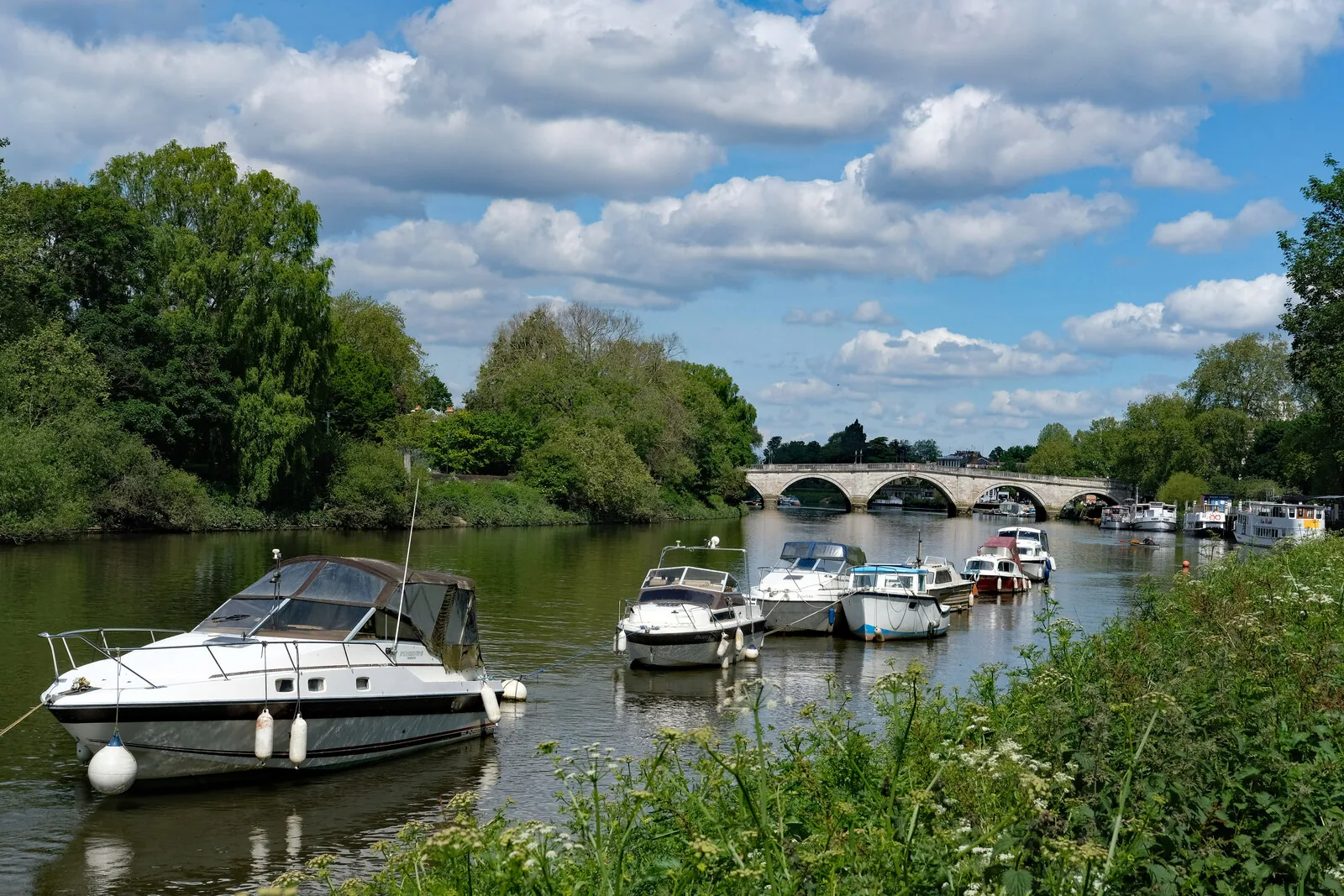
Riverside habitats along the River Thames, woodland and grassland in and next to Richmond Park, and gardens and trees on Richmond Hill, in the Central Richmond Conservation Area and in Richmond town centre can support bats, birds, stag beetles and other protected or Priority species. A PEA should identify which further surveys are actually needed.
The London Borough of Richmond upon Thames assesses effects on habitats and species under Policy 39 of the Local Plan, adopted on 7 October 2025, and Policy G6 of the London Plan, published on 2 March 2021. A PEA is the usual way to show whether further surveys are needed, and it sits alongside any biodiversity net gain assessment. Confirm the current local validation requirements with the council before submitting.
Local plan: Richmond upon Thames Local Plan 2024 to 2039 (adopted 7 October 2025) and The London Plan 2021 (published 2 March 2021) (The Richmond upon Thames Local Plan 2024 to 2039 was adopted on 7 October 2025 and is the adopted borough development plan as of 13 November 2026. It replaces the previous Local Plan Review 2015-18 and the Twickenham Area Action Plan 2013. The London Plan 2021, published on 2 March 2021, also forms part of the development plan. The draft London Plan 2026 is in consultation and is not adopted. There is no 2027 successor council. The London Borough of Richmond upon Thames is the local planning authority and the Lead Local Flood Authority.)
42: Trees, Woodland and Landscape
Requires the protection of existing trees and the provision of new trees in accordance with London Plan Policy G7. The council will resist the loss of trees, including veteran trees, except in limited circumstances, require sufficient space for crowns and roots, require tree protection to BS5837, and require an appropriate replacement for any tree that is felled or, where that is not practicable, a financial contribution using CAVAT.
39: Biodiversity and Geodiversity
Protects designated sites, including SACs, SSSIs, LNRs and SINCs, priority habitats and ecological corridors. Development should deliver measurable net gains for biodiversity. A minimum measurable 10 per cent net gain, using the latest DEFRA metric, is required for proposals that result in one dwelling or more, and for non-residential proposals that increase footprint or floorspace. The mitigation hierarchy must be followed.
G6: Biodiversity and access to nature
London Plan Policy G6 requires development proposals to manage impacts on biodiversity and aim to secure net biodiversity gain. Sites of Importance for Nature Conservation should be protected.
G7: Trees and woodlands
Requires existing trees of value to be retained wherever possible, with adequate replacement if they are removed, using a method such as i-Tree or CAVAT.
8: Flood Risk and Sustainable Drainage
A strategic policy requiring all development to be safe for its lifetime and to avoid or reduce contributing to all sources of flooding, taking account of climate change and not increasing flood risk elsewhere. The sequential test, and where necessary the exception test, apply. Mitigation and resilience, including finished floor levels and flood storage, should follow the Strategic Flood Risk Assessment, with advice from the Lead Local Flood Authority and the Environment Agency. Flood Emergency Plans are required for qualifying proposals in Flood Zones 2 and 3 or in areas at risk of surface water flooding.
SI 12: Flood risk management
Requires development proposals to minimise and mitigate flood risk and address residual risk, including, where possible, making space for water and setting development back from watercourses. In London the boroughs are the Lead Local Flood Authorities.
General guidance for preliminary ecological appraisal (pea), not formal advice for your site.
The London Borough of Richmond upon Thames. The London Plan also forms part of the development plan. The borough is the Lead Local Flood Authority. There is no 2027 successor council for this borough.
Where a site contains or is next to habitats, watercourses, buildings or trees that could support protected or Priority species, including the River Thames, Richmond Park or Richmond Hill. Confirm the current list with the council.
No. A PEA identifies habitats, species and further survey needs. A net gain assessment uses the statutory metric to show at least 10 per cent gain under Policy 39. Many applications need both.
No other published town guides for this survey in the council area yet.