Featured partner
Recommended for Great Dunmow

ROAVR Group
Tree, ecology, flood risk and topographical surveys for planning applications.
4.9 Google rating
Get a quote
Local experts.
Featured partner
Recommended for Great Dunmow
Tree, ecology, flood risk and topographical surveys for planning applications.
4.9 Google rating
Local experts.
Ecological consultancy whose own website states that it is based in Essex and lists…
Ecological consultancy of Essex Wildlife Trust, trading as Essex Ecology Services…
Arboricultural and ecological consultancy with a Kent office at The Watermill, Maidstone…
Ecological consultancy with a Southern office at Throws Farm, Throws Corner, Dunmow,…
Protected species survey work in Great Dunmow often follows a preliminary appraisal where a site could affect habitats in the Great Dunmow Conservation Area or along the River Chelmer. Uttlesford District Council is the local planning authority. The presence of protected species is a material consideration, and the extent to which they may be affected should be established before planning permission is granted. Habitats in the Great Dunmow Conservation Area and along the River Chelmer can support bats, great crested newts, reptiles, nesting birds and other protected species. It is a historic market town on the River Chelmer in north-west Essex, quite unlike Saffron Walden to the north or the New Towns farther south, with an official conservation area covering the High Street, Parsonage Downs and Church End. Confirm the current validation requirements with the council before submitting.
Local planning authority: Uttlesford District Council
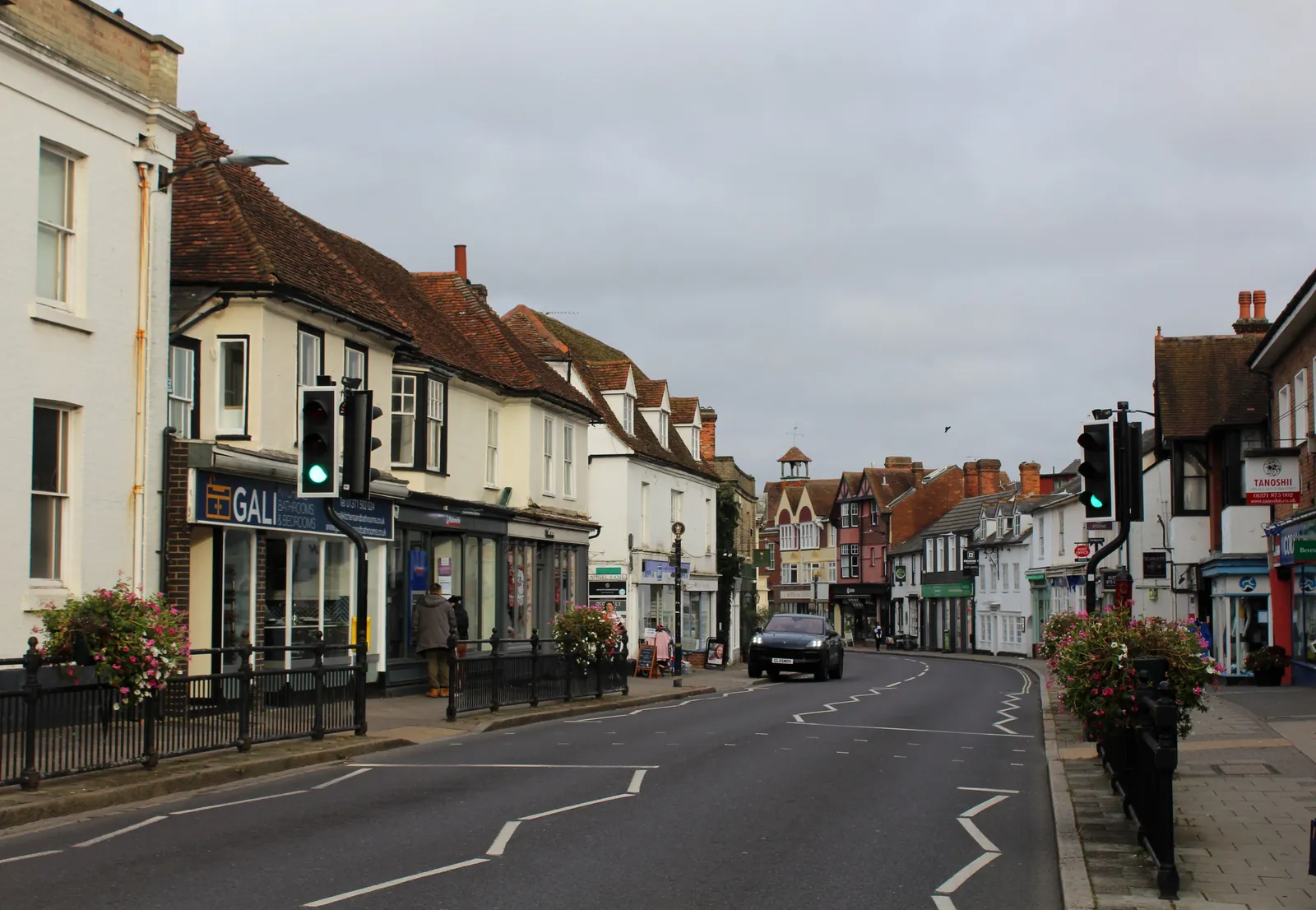
Great Dunmow is in the area of Uttlesford District Council. It is a historic market town on the River Chelmer in north-west Essex, quite unlike Saffron Walden to the north or the New Towns farther south, with an official conservation area covering the High Street, Parsonage Downs and Church End. The Great Dunmow Conservation Area and the River Chelmer are the official features that shape protected species work here. Essex County Council is the Lead Local Flood Authority. There is no confirmed 2027 successor council for Essex.
In Great Dunmow, including around the Great Dunmow Conservation Area and along the River Chelmer, the same adopted local plan policies apply. Uttlesford District Council assesses ecology and protected species under Core Policy 40 of the Uttlesford Local Plan 2021-2041. Core Policy 40 sets a 20 per cent biodiversity net gain standard for qualifying development, and Core Policy 38 protects designated biodiversity sites, including ancient woodland. Confirm the current validation requirements with the council before submitting.
Local plan: Uttlesford Local Plan 2021-2041 (The Uttlesford Local Plan 2021-2041 was adopted on 25 March 2026 and is the statutory development plan as of 15 November 2026, superseding the 2005 plan.)
Core Policy 36: Flood Risk
Core Policy 36 (Flood Risk) of the Uttlesford Local Plan 2021-2041, adopted on 25 March 2026, is the adopted flood-risk policy of the statutory development plan and is applied with national policy on the sequential and exception tests and sustainable drainage.
Core Policy 40: Biodiversity and Nature Recovery
Core Policy 40 (Biodiversity and Nature Recovery) of the Uttlesford Local Plan 2021-2041, adopted on 25 March 2026, sets a 20 per cent biodiversity net gain standard for qualifying development in the council’s area. That adopted local standard is higher than the statutory 10 per cent minimum.
Core Policy 38: Designated biodiversity sites
Core Policy 38 of the Uttlesford Local Plan 2021-2041 protects designated biodiversity sites, including ancient woodland. Development affecting ancient woodland or veteran trees is only permitted where its benefits clearly outweigh the loss, and mitigation and enhancement are required.
General guidance for protected species survey, not formal advice for your site.
Uttlesford District Council. Essex County Council is the Lead Local Flood Authority. There is no confirmed 2027 successor council for Essex.
Protected species survey work in Great Dunmow often follows a preliminary appraisal where a site could affect habitats in the Great Dunmow Conservation Area or along the River Chelmer. Confirm the current validation requirements with the council.
Core Policy 40 sets a 20 per cent biodiversity net gain standard for qualifying development, and Core Policy 38 protects designated biodiversity sites, including ancient woodland. Confirm the current validation requirements with the council.