Featured partner
Recommended for Islington

ROAVR Group
Tree, ecology, flood risk and topographical surveys for planning applications.
4.9 Google rating
Get a quote
Local experts.
Featured partner
Recommended for Islington
Tree, ecology, flood risk and topographical surveys for planning applications.
4.9 Google rating
Local experts.
London arboricultural consultancy with a trading office at Rathbone Place, Fitzrovia.
Arboricultural and ecological consultancy trading as Tim Moya Associates from 2 The…
Independent arboricultural consultancy based in Radlett, just north of the London…
Environmental consultancy founded in 2004, with its head office on the Surrey Research…
Street trees and garden canopies along Upper Street, planting around Islington Town Hall, and trees on the towpath and basins of the Regent's Canal are a large part of how this major centre reads. The London Borough of Islington requires development to minimise impacts on existing trees, to protect them during construction, and normally refuses the removal of protected trees. Where loss is demonstrably unavoidable, replacement must follow a set hierarchy, starting on site. A BS 5837 tree survey shows the council what is being retained, how root protection will work on tight urban plots, and how new planting will make up any loss. Surface water flood risk on this densely built corridor is another reason to keep trees and soft landscape on the plan, because Policy G4 also expects sustainable drainage to be designed with the landscape.
Local planning authority: London Borough of Islington
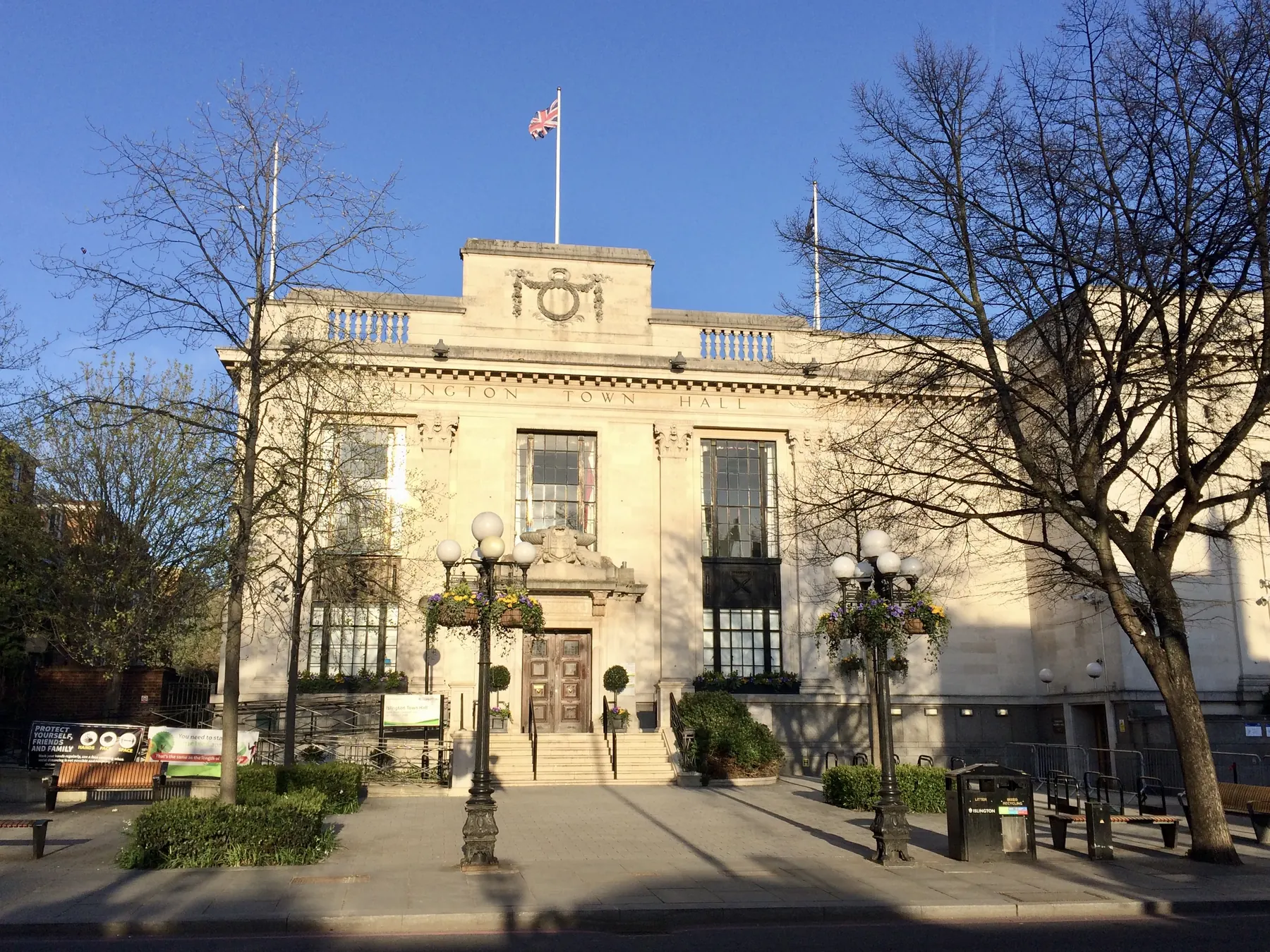
Trees along Upper Street, around Islington Town Hall and beside the Regent's Canal contribute to amenity and biodiversity. Surface water flood risk should be considered alongside any tree and landscape scheme on these tight plots.
The London Borough of Islington assesses tree and landscape issues under Policy G4 of the Islington Local Plan, adopted on 28 September 2023, read with the London Plan tree and urban greening policies. The council updated its validation requirements in April 2024. Confirm the current local validation requirements with the council before submitting.
Local plan: Islington Local Plan: Strategic and Development Management Policies (The Islington Local Plan was adopted on 28 September 2023 and is the adopted local plan. Previous Core Strategy and Development Management policies are withdrawn. The London Plan, published on 2 March 2021, also forms part of the development plan. There is no 2027 successor council for this borough.)
G4: Biodiversity, landscape design and trees
Policy G4 of the Islington Local Plan, adopted on 28 September 2023, requires all developments to protect, enhance and contribute to the landscape, biodiversity value and growing conditions of the site and surrounding area, including connectivity between habitats. Development should protect Sites of Importance for Nature Conservation. Proposals involving new buildings, redevelopment or large extensions must submit a Landscape Design Strategy which maximises green infrastructure, biodiversity and sustainable drainage, and must aim to secure a net gain in biodiversity value with a clear priority for on-site measures. The policy does not set a percentage above the statutory 10 per cent minimum. All developments, including refurbishment, must carry out ecological surveys and assessments wherever the proposal is likely to affect protected species, habitats or priority species, or is within or close to a SINC. Developments must minimise impacts on existing trees, hedges and other significant vegetation, protect trees during development, and follow a replacement hierarchy where loss is demonstrably unavoidable. Permission or consent for the removal of protected trees will normally be refused.
S8: Flood Risk Management
Policy S8 requires a site-specific flood risk assessment for proposals on sites of 1 hectare or greater; new development proposing more than 100 square metres increase in floorspace in a critical drainage area; changes of use to a more vulnerable class; Highly Vulnerable development in an area of high or medium surface water flood risk; and More Vulnerable development in an area of high surface water flood risk. The assessment must consider all sources of flooding, with particular focus on surface water, and must investigate groundwater flooding where that risk is identified. Islington is located entirely in Flood Zone 1, so fluvial flood risk is low, but surface water, groundwater, sewers and artificial sources remain relevant. Policy S9 requires integrated water management and sustainable drainage.
S9: Integrated Water Management and Sustainable Drainage
Policy S9 requires development to incorporate integrated water management and sustainable drainage, following the drainage hierarchy and contributing to a reduction in flood risk where required. It should be read with Policy S8, which sets when a site-specific flood risk assessment is needed and how residual risk, including in critical drainage areas and areas of high surface water flood risk, is to be managed.
General guidance for tree survey (bs5837), not formal advice for your site.
The London Borough of Islington. The London Plan also forms part of the development plan. The borough is the Lead Local Flood Authority. There is no 2027 successor council for this borough.
A tree survey is expected where existing trees could be affected, including on Upper Street, around Islington Town Hall and beside the Regent's Canal. Policy G4 requires those trees to be protected and, where loss is unavoidable, replaced. Confirm the current local validation requirements with the council before submitting.
Yes. The London Plan, published on 2 March 2021, forms part of the development plan. Policy G7 on trees and woodlands is the London Plan policy most often read alongside a tree survey.