Featured partner
Recommended for Sutton

ROAVR Group
Tree, ecology, flood risk and topographical surveys for planning applications.
4.9 Google rating
Get a quote
Local experts.
Featured partner
Recommended for Sutton
Tree, ecology, flood risk and topographical surveys for planning applications.
4.9 Google rating
Local experts.
Independent arboricultural consultancy based in Coulsdon.
Farnham-based tree consultancy led by Alex Needs, a Chartered Arboriculturist and…
Environmental consultancy founded in 2004, with its head office on the Surrey Research…
Multi-disciplinary practice founded in 1985, offering arboriculture, ecology, landscape…
Trees in Sutton Town Centre and along the Green Corridors towards the River Wandle are a frequent reason for a tree survey in Sutton. A planning application should record trees on and next to the site, usually to BS5837, so a layout can be designed around them. The local planning authority is the London Borough of Sutton. Policy 28 of the Local Plan, adopted on 26 February 2018, requires a landscaping scheme where trees are present and the retention of trees that are important in the local landscape, including younger trees with future value. Policy G7 of the London Plan, published on 2 March 2021, which also forms part of the development plan, requires trees of value to be retained where possible.
Local planning authority: London Borough of Sutton
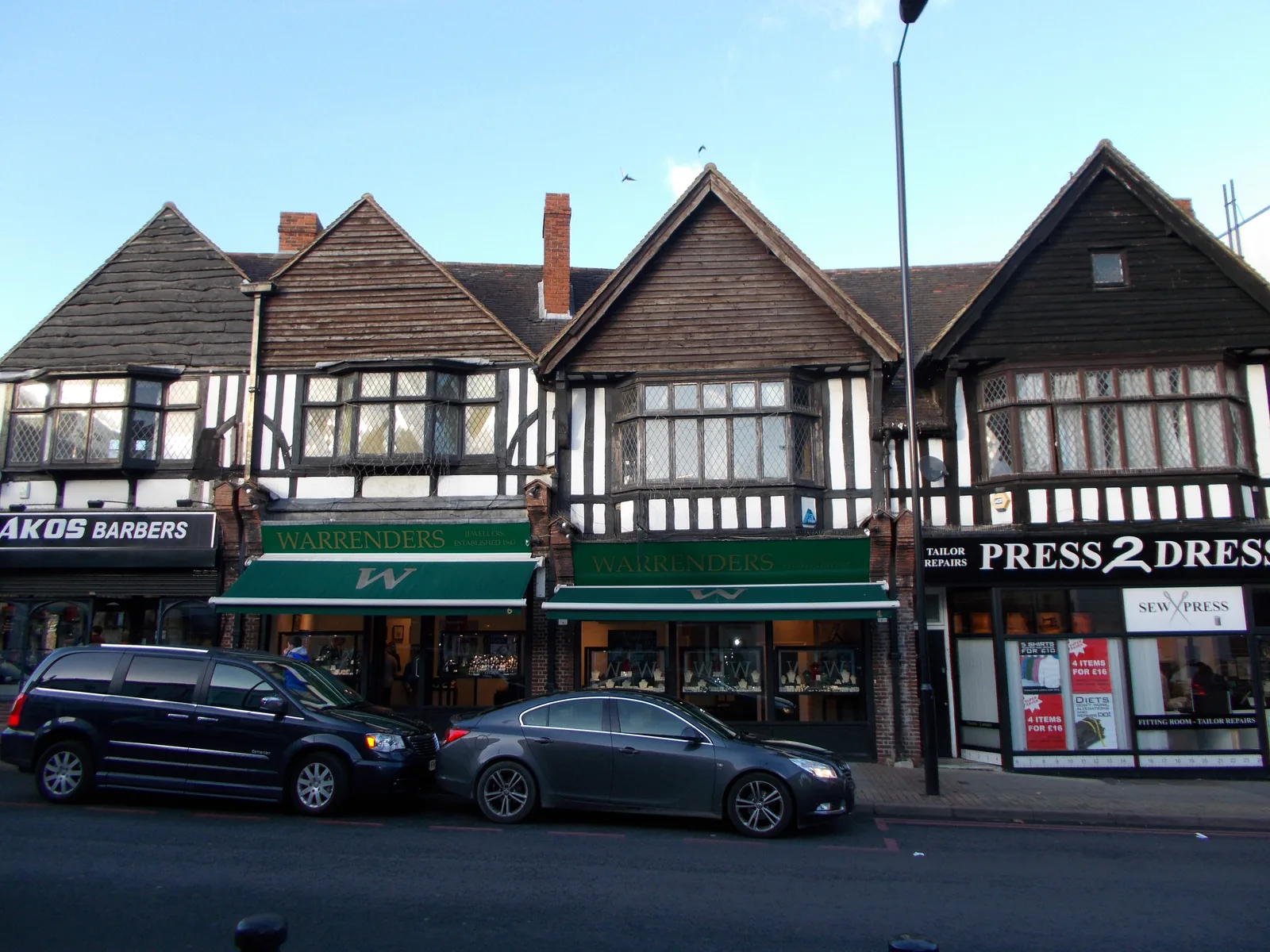
Street trees and landscaping in Sutton Town Centre, Green Corridors towards the River Wandle and Wandle Valley, and trees on the edge of the Metropolitan Green Belt at the south of the borough, all come within Policy 28. A tree survey should be coordinated with any flood risk or ecological work close to those features.
The London Borough of Sutton assesses tree and landscape issues under Policy 28 of the Local Plan, adopted on 26 February 2018, together with Policy G7 of the London Plan, published on 2 March 2021, which also forms part of the development plan. Policy 28 expects important trees to be retained and allowed space to mature, and may require replacement planting where trees are removed before an application. Confirm the current local validation requirements with the council before submitting.
Local plan: Sutton Local Plan 2016 to 2031 (adopted 26 February 2018) and The London Plan 2021 (published 2 March 2021) (The Sutton Local Plan 2016 to 2031 was adopted on 26 February 2018 and remains the adopted borough development plan as of 13 November 2026. The London Plan 2021, published on 2 March 2021, also forms part of the development plan. The council's Biodiversity Net Gain Guidance Note of 16 April 2025 states that the mandated 10 per cent target will be applied to all developments captured by the mandate until any later formal change. A new Local Plan was being prepared for submission in 2026 and is not adopted. The draft London Plan 2026 is in consultation and is not adopted. There is no 2027 successor council. The London Borough of Sutton is the local planning authority and the Lead Local Flood Authority.)
28: Character and Design
Requires new development to respond to natural features and retain trees, hedges and other landscape features of amenity value where possible. Where trees are present, a landscaping scheme should provide for the retention of existing trees that are important in the local landscape, including younger trees with future value, and allow sufficient space above and below ground for trees to grow to maturity. Where trees are felled before permission is sought, replacement planting may be required. Works near trees should comply with the latest arboricultural standards.
26: Biodiversity
The council will protect and enhance SINCs, Green Corridors and biodiversity generally. Major development should result in no net loss of biodiversity as assessed against the DEFRA metric or another metric later adopted formally, and should enhance biodiversity where possible. Banstead Downs SSSI lies adjacent to the borough. The policy does not set a percentage above the statutory 10 per cent duty.
G6: Biodiversity and access to nature
London Plan Policy G6 requires development proposals to manage impacts on biodiversity and aim to secure net biodiversity gain. Sites of Importance for Nature Conservation should be protected.
G7: Trees and woodlands
Requires existing trees of value to be retained wherever possible, with adequate replacement if they are removed, using a method such as i-Tree or CAVAT.
32: Flood Risk and Sustainable Drainage
Requires a flood risk assessment in Flood Zones 2 and 3, for major development of more than 1 hectare in Flood Zone 1, and for any proposal in a critical drainage area, together with the sequential and exception tests where appropriate. Development should be set back 8 metres from main rivers and 5 metres from ordinary watercourses. Finished floor levels in Zones 2 and 3 should be at least 300 mm above the flood level for more or highly vulnerable uses. Sustainable drainage should follow the Mayor's drainage hierarchy, restrict runoff to greenfield rates, and contain the 1 in 30 year event without flooding. Major applications need a Drainage Assessment Form.
SI 12: Flood risk management
Requires development proposals to minimise and mitigate flood risk and address residual risk, including, where possible, making space for water and setting development back from watercourses. In London the boroughs are the Lead Local Flood Authorities.
General guidance for tree survey (bs5837), not formal advice for your site.
The London Borough of Sutton. The London Plan also forms part of the development plan. The borough is the Lead Local Flood Authority. There is no 2027 successor council for this borough.
Policy 28 requires a landscaping scheme where trees are present, typically shown through a BS5837 survey, impact assessment and protection plan. Confirm the current validation checklist with the council.
Yes. Policy G7 of the London Plan forms part of the development plan and requires trees of value to be retained where possible, with adequate replacement if they are removed.
No other published town guides for this survey in the council area yet.