Featured partner
Recommended for Caterham

ROAVR Group
Tree, ecology, flood risk and topographical surveys for planning applications.
4.9 Google rating
Get a quote
Local experts.
Featured partner
Recommended for Caterham
Tree, ecology, flood risk and topographical surveys for planning applications.
4.9 Google rating
Local experts.
Independent ecology consultancy with its head office in Leatherhead, Surrey.
Environmental consultancy founded in 2004, with its head office on the Surrey Research…
Multi-disciplinary practice founded in 1985, offering arboriculture, ecology, landscape…
Independent ecological consultancy with a Surrey office near Farnham, plus offices in…
The Caterham Bourne corridor and the wooded hillsides are important parts of the setting for a biodiversity net gain assessment in Caterham. The assessment uses the statutory metric to show how a proposal will leave habitats in a measurably better state. The local planning authority is Tandridge District Council. Policy DP19 of the Detailed Policies, adopted on 24 July 2014, and Policy CSP17 of the Core Strategy, adopted on 15 October 2008, seek protection, enhancement and, where possible, expansion of biodiversity, but they do not set a percentage. These drafts apply the statutory minimum of 10 per cent under the Environment Act 2021, unless a scheme is exempt.
Local planning authority: Tandridge District Council
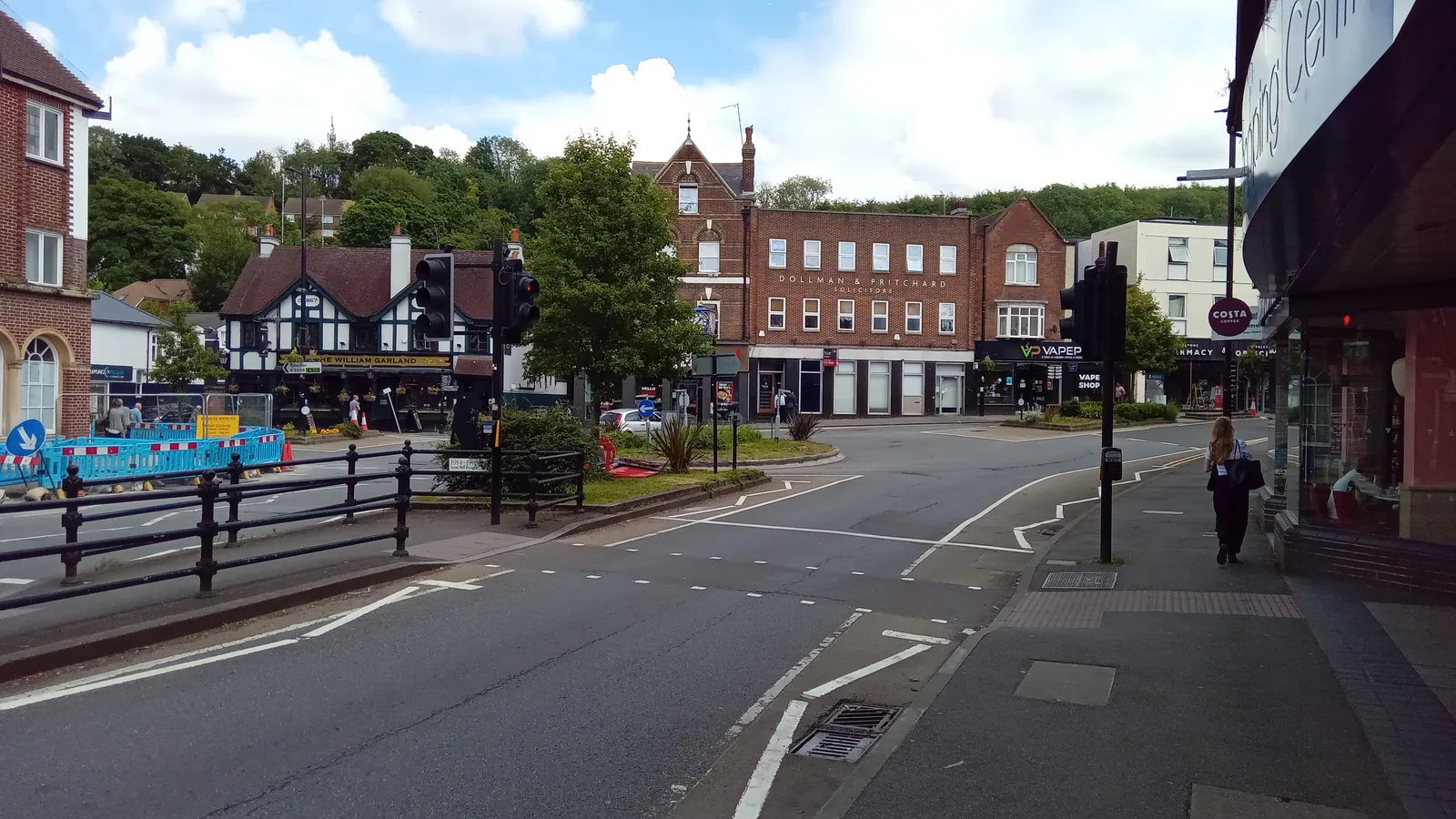
Caterham sits at the head of the Caterham Bourne, with wooded hillsides in Caterham Valley and the Metropolitan Green Belt on the edge of the town. Policy DP19 also protects ancient woodland, veteran trees and Priority habitats, and requires overall ecological benefits where irreplaceable assets are affected. A new Local Plan 2027-2042 is only at Regulation 19 stage and is not used for a local percentage.
Tandridge District Council applies the statutory biodiversity net gain duty under the Environment Act 2021, which requires a minimum 10 per cent gain for qualifying development, together with Policy DP19 of the Detailed Policies, adopted on 24 July 2014, and Policy CSP17 of the Core Strategy, adopted on 15 October 2008. Those adopted policies seek protection and enhancement of biodiversity but do not set a higher local percentage. Confirm the current validation requirements with the council before submitting.
Local plan: Tandridge District Core Strategy (adopted 15 October 2008) and Local Plan Part 2: Detailed Policies (adopted 24 July 2014) (The Core Strategy was adopted on 15 October 2008 and the Detailed Policies on 24 July 2014. These remain the adopted development plan as of 13 November 2026. The Caterham, Chaldon and Whyteleafe Neighbourhood Plan was made on 18 June 2026. A new Tandridge District Local Plan 2027-2042 is at Regulation 19 stage (publication October 2026) and is not adopted. Under local government reorganisation, plan-making passes to the new East Surrey unitary council on 1 April 2027.)
DP19: Biodiversity, Geological Conservation & Green Infrastructure
Supports proposals that protect, enhance or increase green infrastructure and restore or create Priority Habitats. Proposals that would cause significant harm to designated sites or the wider GI network will be refused unless reasonable alternatives are unsuitable and harm is avoided, mitigated or, as a last resort, compensated. Harm to irreplaceable assets such as SSSIs, ancient woodland or veteran trees will only be permitted in wholly exceptional circumstances, and overall ecological benefits should be delivered. Development affecting protected or Priority species is only permitted where the species will not be harmed or appropriate mitigation is put in place. The policy does not set a biodiversity net gain percentage.
CSP17: Biodiversity
Requires development proposals to protect biodiversity and provide for the maintenance, enhancement, restoration and, if possible, expansion of biodiversity, by aiming to restore or create suitable semi-natural habitats and ecological networks in accordance with the aims of the Surrey Biodiversity Action Plan. It does not set a net gain percentage. The reasoned justification notes there are no European sites in Tandridge, but Ashdown Forest and the Mole Gap to Reigate Escarpment lie nearby.
DP21: Sustainable Water Management
Supports restoring natural flows and functional floodplain. Proposals should reduce the cause and impact of flooding, including through green infrastructure for flood storage and SuDS, with runoff restricted to the pre-development rate and maintenance considered. Development in Flood Zones 2 and 3, on sites of 1 hectare or more in Zone 1, or on sites at medium or high risk from other sources of flooding identified in the SFRA, is only permitted where the sequential and, where appropriate, exception tests are passed, a site-specific flood risk assessment shows risk is reduced or at least risk-neutral, and flood-resilient and resistant design is included.
DP7: General Policy for New Development
Requires landscaping to be an integral part of layout design, with new planting and the retention of important trees, hedgerows and walls wherever possible. Clause 13 requires a landscaping scheme where trees are present, retaining trees that are important by virtue of their significance in the local landscape (including size, form, maturity, rarity or unusual character) and younger trees with future landscape value, and allowing space above and below ground for trees to grow to maturity. Where trees are felled before permission is sought, replacement planting may be required.
General guidance for biodiversity net gain (bng), not formal advice for your site.
Tandridge District Council. From 1 April 2027 planning powers pass to the new East Surrey unitary council under local government reorganisation.
Yes, for qualifying applications. The council applies the statutory minimum of 10 per cent under the Environment Act 2021. Policies DP19 and CSP17 already seek protection and enhancement of biodiversity but do not set a higher local percentage. Confirm the current validation requirements with the council.
No. The Tandridge District Local Plan 2027-2042 is only at Regulation 19 stage and is not adopted. These drafts use the statutory 10 per cent duty.