Featured partner
Recommended for Woking

ROAVR Group
Tree, ecology, flood risk and topographical surveys for planning applications.
4.9 Google rating
Get a quote
Local experts.
Featured partner
Recommended for Woking
Tree, ecology, flood risk and topographical surveys for planning applications.
4.9 Google rating
Local experts.
Environmental consultancy founded in 2004, with its head office on the Surrey Research…
Multi-disciplinary practice founded in 1985, offering arboriculture, ecology, landscape…
Ecological consultancy owned by Surrey Wildlife Trust, based at the Trust's offices in…
Independent ecology consultancy with its head office in Leatherhead, Surrey.
Around Horsell Common, Sheets Heath and Brookwood Heath, a biodiversity net gain assessment in Woking has to sit alongside the rules that protect the Thames Basin Heaths SPA. The assessment uses the statutory metric to show how a proposal will leave habitats in a measurably better state. The local planning authority is Woking Borough Council. Policy CS7 of the Core Strategy, adopted on 25 October 2012, requires development to contribute to the enhancement of biodiversity. These drafts apply the statutory minimum of 10 per cent under the Environment Act 2021, unless a scheme is exempt. Policy CS8 does not allow net new homes within 400 m of those heaths, and most of the borough sits in the 5 km zone of influence. An updated Thames Basin Heaths SPA Avoidance Strategy, adopted on 22 January 2026, is additional to net gain, not a substitute for it.
Local planning authority: Woking Borough Council
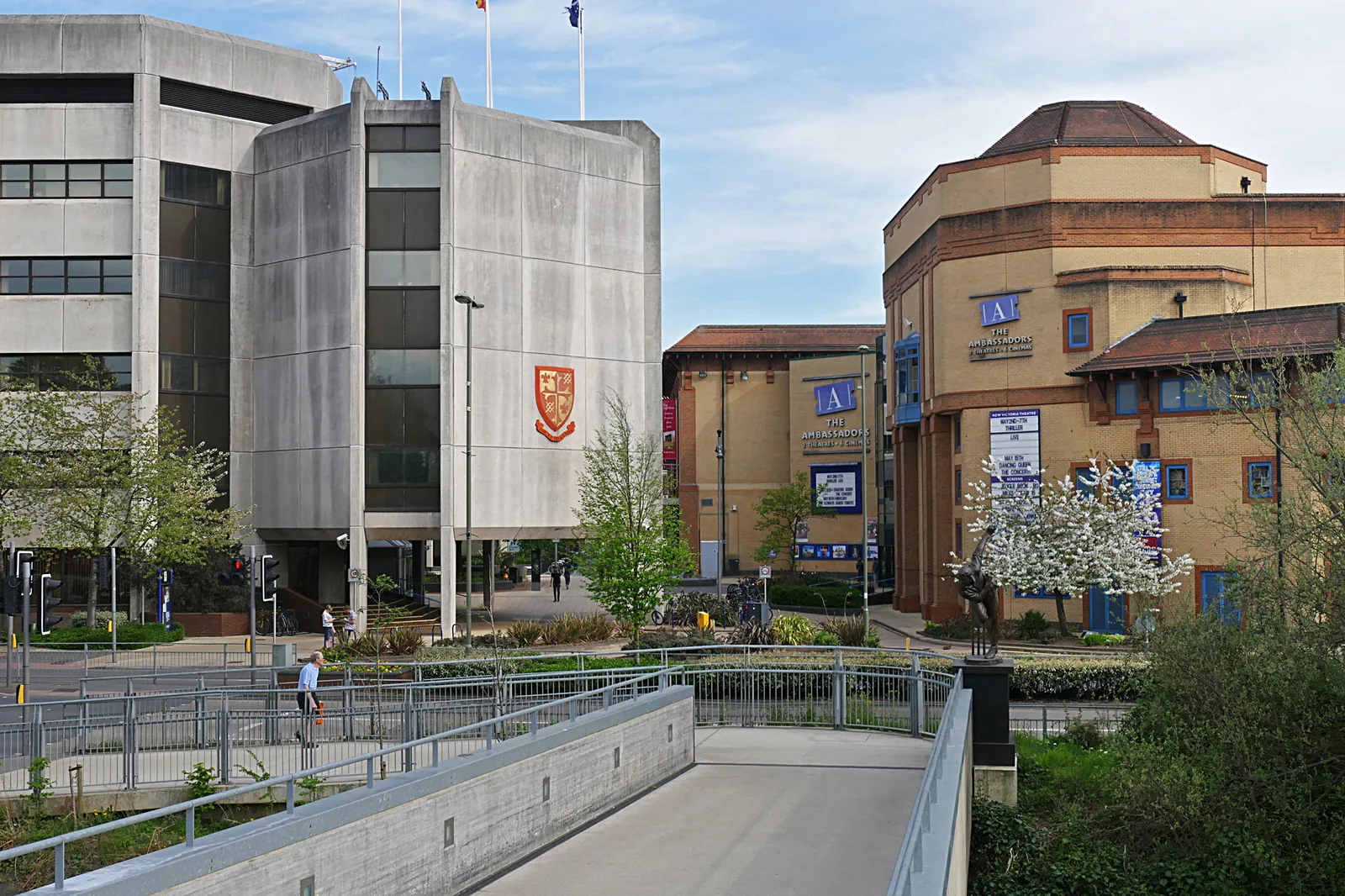
Woking sits among lowland heath that is internationally important for nightjar, woodlark and Dartford warbler. Horsell Common lies just north of the town, with Sheets Heath and Brookwood Heath to the west; all three are Thames Basin Heaths SPA component sites named in Policy CS8. To the west of the borough is the Thursley, Ash, Pirbright and Chobham SAC, which Policy CS7 also protects. The Basingstoke Canal and the Hoe Stream provide linear habitats through the urban area. New housing in the 5 km SPA zone has to secure Suitable Alternative Natural Greenspace and a Strategic Access Management and Monitoring contribution, which is a separate requirement from biodiversity net gain.
Woking Borough Council applies Core Strategy Policy CS7 (Biodiversity and nature conservation) and, for residential schemes that could affect the European site, Policy CS8 and the Thames Basin Heaths Special Protection Area Avoidance Strategy adopted on 22 January 2026. CS8 imposes a 400 m exclusion zone around the SPA in which net new residential development is not permitted, and a 5 km zone of influence in which SANG and SAMM contributions are required. Statutory biodiversity net gain under the Environment Act 2021 applies as well, at a minimum of 10 per cent, subject to the national exemptions. Applicants should not treat SPA avoidance land as a substitute for a net gain assessment, or the other way around.
Local plan: Woking Core Strategy (2012), Development Management Policies DPD (2016) and Site Allocations Plan (2021) (Adopted. The Core Strategy was adopted on 25 October 2012 and reviewed in 2018 and on 12 October 2023. The Development Management Policies DPD was adopted on 20 October 2016 and reviewed in October 2021. The Site Allocations Plan was adopted on 14 October 2021.)
CS6: Green Belt
Protects the Metropolitan Green Belt around Woking's urban area and sets the tests for inappropriate development.
CS7: Biodiversity and nature conservation
Protects internationally, nationally and locally designated sites, including the Thames Basin Heaths SPA and the Thursley, Ash, Pirbright and Chobham SAC, and requires development to contribute to biodiversity.
CS8: Thames Basin Heaths Special Protection Areas
Gives priority protection to the SPA. No net new residential development is permitted within 400 m. Development between 400 m and 5 km must contribute to SANG and SAMM. Three component sites in or partly in the borough are Horsell Common, Sheets Heath (Brookwood) and Brookwood Heath.
CS9: Flooding and water management
Expects development in Flood Zone 1. Flood Zone 2 is considered only if there is no suitable alternative at lower risk. Development in Flood Zones 3a and 3b requires a comprehensive flood risk assessment and must not increase flood risk elsewhere. Permission is refused where proposals would adversely affect an SPA, SAC or Ramsar site.
CS21: Design
Requires proposals to incorporate landscaping, including the retention of trees of amenity value and other features.
DM2: Trees and landscaping
Supports removal of TPO or conservation-area trees only in exceptional circumstances with over-riding planning benefits and replacement planting. Requires retained trees to be protected during construction and given adequate space, and new landscape schemes to enhance character and connect to green infrastructure.
DM4: Development in the vicinity of Basingstoke Canal
Sets additional design and amenity tests for development near the Basingstoke Canal, which is also identified as a green and blue infrastructure asset.
General guidance for biodiversity net gain (bng), not formal advice for your site.
Woking Borough Council. From 1 April 2027 planning powers pass to the new West Surrey unitary council under local government reorganisation.
Statutory net gain under the Environment Act 2021 applies to planning applications that are not exempt. Woking Borough Council also applies Policy CS7, which expects development to enhance biodiversity. Confirm any local validation requirements with the council.
Policy CS8 does not allow net new residential development within 400 m of the SPA. Between 400 m and 5 km, the Avoidance Strategy adopted on 22 January 2026 requires a contribution to Suitable Alternative Natural Greenspace and to Strategic Access Management and Monitoring. This is in addition to biodiversity net gain.
Policy CS8 names three component sites in or partly in the borough: Horsell Common, Sheets Heath (Brookwood) and Brookwood Heath.
No other published town guides for this survey in the council area yet.