Featured partner
Recommended for Wimbledon

ROAVR Group
Tree, ecology, flood risk and topographical surveys for planning applications.
4.9 Google rating
Get a quote
Local experts.
Featured partner
Recommended for Wimbledon
Tree, ecology, flood risk and topographical surveys for planning applications.
4.9 Google rating
Local experts.
Environmental and ecology consultancy with a London office at Holyrood Street, near…
London environmental consultancy based at Marshalsea Road, Southwark, formerly trading…
Independent ecology consultancy with its head office in Leatherhead, Surrey.
Environmental consultancy founded in 2004, with its head office on the Surrey Research…
Wimbledon Common, including the Wimbledon Common Special Area of Conservation, and the wooded setting of Wimbledon Village are a frequent reason for a preliminary ecological appraisal in Wimbledon. The appraisal identifies habitats and the likelihood of protected species so that further surveys can be programmed. The local planning authority is the London Borough of Merton. Policy O15.3 of the Merton Local Plan, adopted on 20 November 2024, protects Sites of Recognised Nature Conservation Interest, protected species, priority habitats and Green Corridors. The Local Validation Checklist 2025, updated June 2026, asks for a preliminary ecological appraisal where development, including lighting, is likely to affect those interests. Policy G6 of the London Plan, published on 2 March 2021, also forms part of the development plan.
Local planning authority: London Borough of Merton
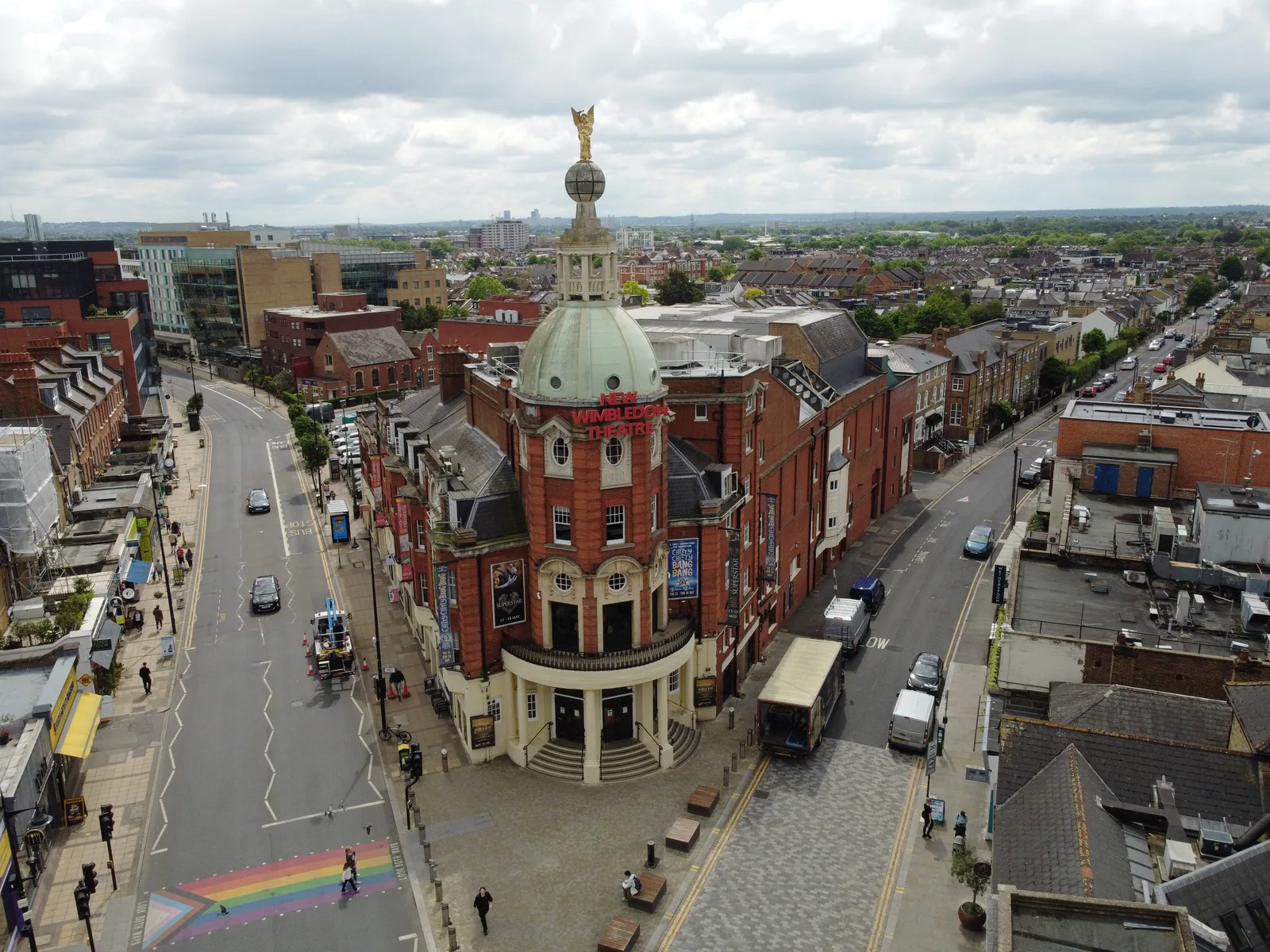
Wimbledon Common is the borough's only SSSI and is also a Special Area of Conservation; the Local Plan states that an Appropriate Assessment may be required if a project is likely to have a significant effect. A preliminary appraisal for sites in Wimbledon Town Centre, Wimbledon Village or near Wimbledon Park should also consider links to the River Wandle, the Wandle Valley Regional Park and Morden Hall Park, and any further survey work for bats or other protected species.
The London Borough of Merton assesses ecological appraisals under Policy O15.3 of the Merton Local Plan, adopted on 20 November 2024, together with Policy G6 of the London Plan, published on 2 March 2021. The Local Validation Checklist 2025, updated June 2026, requires a preliminary ecological appraisal for proposals, including those with floodlighting or external lighting, that are likely to affect protected species, priority habitats or Sites of Recognised Nature Conservation Interest, informed by Greenspace Information for Greater London data and CIEEM guidance. Confirm the current local validation requirements with the council before submitting.
Local plan: Merton Local Plan 2024–2037/38 (adopted 20 November 2024) and The London Plan 2021 (published 2 March 2021) (The Merton Local Plan was formally adopted on 20 November 2024 and replaced the Sites and Policies Plan 2014, the Policies Map 2014 and the Core Planning Strategy 2011. The London Plan 2021, published on 2 March 2021, also forms part of the development plan. The draft London Plan 2026 is in consultation and is not adopted. There is no 2027 successor council. The London Borough of Merton is the local planning authority and the Lead Local Flood Authority.)
O15.3: Biodiversity and Access to Nature
Protects Sites of Recognised Nature Conservation Interest, protected and priority species and habitats, and Green Corridors, and requires development to contribute at least 10 per cent biodiversity net gain in accordance with statutory requirements and national guidance. A 10 metre buffer to watercourses should be restored where feasible.
O15.4: Protection of Trees, Hedges and Other Landscape Features
Requires development to protect and retain trees, hedges and other landscape features of amenity value on the site and on adjoining land wherever possible. Loss is only justified in limited cases, with high-quality replacement of equal value on site, or a financial contribution if on-site provision is agreed not to be possible. Additional tree planting is expected where appropriate, and Tree Preservation Orders will be used to safeguard significant trees.
O15.6: Wandle Valley Regional Park
Seeks to protect the Wandle Valley Regional Park and maintain it as a strategic, biodiverse and accessible corridor through the borough, including improved walking and cycling connections and the Wandle Trail.
F15.7: Flood Risk Management and Sustainable Drainage
Sets out how the council, as Lead Local Flood Authority, will steer development to areas of lowest flood risk, implement the Strategic Flood Risk Assessment and Local Flood Risk Management Strategy, and require flood resilience and, on major development, sustainable drainage and water-efficiency measures.
F15.8: Managing Local Flooding
Requires flood risk assessments and drainage strategies to use the latest climate change allowances, a sequential approach to site layout, and buildings to be set back at least 8 metres from main rivers and 5 metres from ordinary watercourses. A Flood Emergency Plan is required in Flood Zones 2 and 3, or on sites at high risk of surface water flooding, for 10 or more dwellings, 1,000 square metres or more of non-residential development, or where safe access cannot be achieved.
F15.9: Sustainable Drainage Systems (SUDS)
Requires development to include sustainable drainage to manage surface water runoff and to deliver biodiversity, amenity and water-quality benefits, in line with the borough's role as Lead Local Flood Authority.
General guidance for preliminary ecological appraisal (pea), not formal advice for your site.
The London Borough of Merton. The London Plan also forms part of the development plan. The borough is the Lead Local Flood Authority. There is no 2027 successor council for this borough.
The Local Validation Checklist 2025, updated June 2026, asks for one where a proposal, including lighting, is likely to affect protected species, priority habitats or Sites of Recognised Nature Conservation Interest, including Wimbledon Common.
Yes. The London Plan, published on 2 March 2021, forms part of the development plan. Policy G6 deals with biodiversity alongside Policy O15.3 of the Merton Local Plan.
No other published town guides for this survey in the council area yet.