Featured partner
Recommended for Harrow

ROAVR Group
Tree, ecology, flood risk and topographical surveys for planning applications.
4.9 Google rating
Get a quote
Local experts.
Featured partner
Recommended for Harrow
Tree, ecology, flood risk and topographical surveys for planning applications.
4.9 Google rating
Local experts.
London-based ecological consultancy in Muswell Hill.
Environmental and ecology consultancy with a London office at Holyrood Street, near…
London environmental consultancy based at Marshalsea Road, Southwark, formerly trading…
Environmental consultancy founded in 2004, with its head office on the Surrey Research…
Harrow on the Hill, the Wealdstone Brook and the Metropolitan Green Belt on the edge of the borough can support bats, reptiles and nesting birds, so a protected species survey in Harrow often has to look beyond the application site. For applications the local planning authority is the London Borough of Harrow. Policy GI3 of the Local Plan 2021-2041, adopted on 24 March 2026, requires the mitigation hierarchy to be followed for habitats and for protected and priority species, and requires up-to-date surveys and mitigation strategies where appropriate.
Local planning authority: London Borough of Harrow
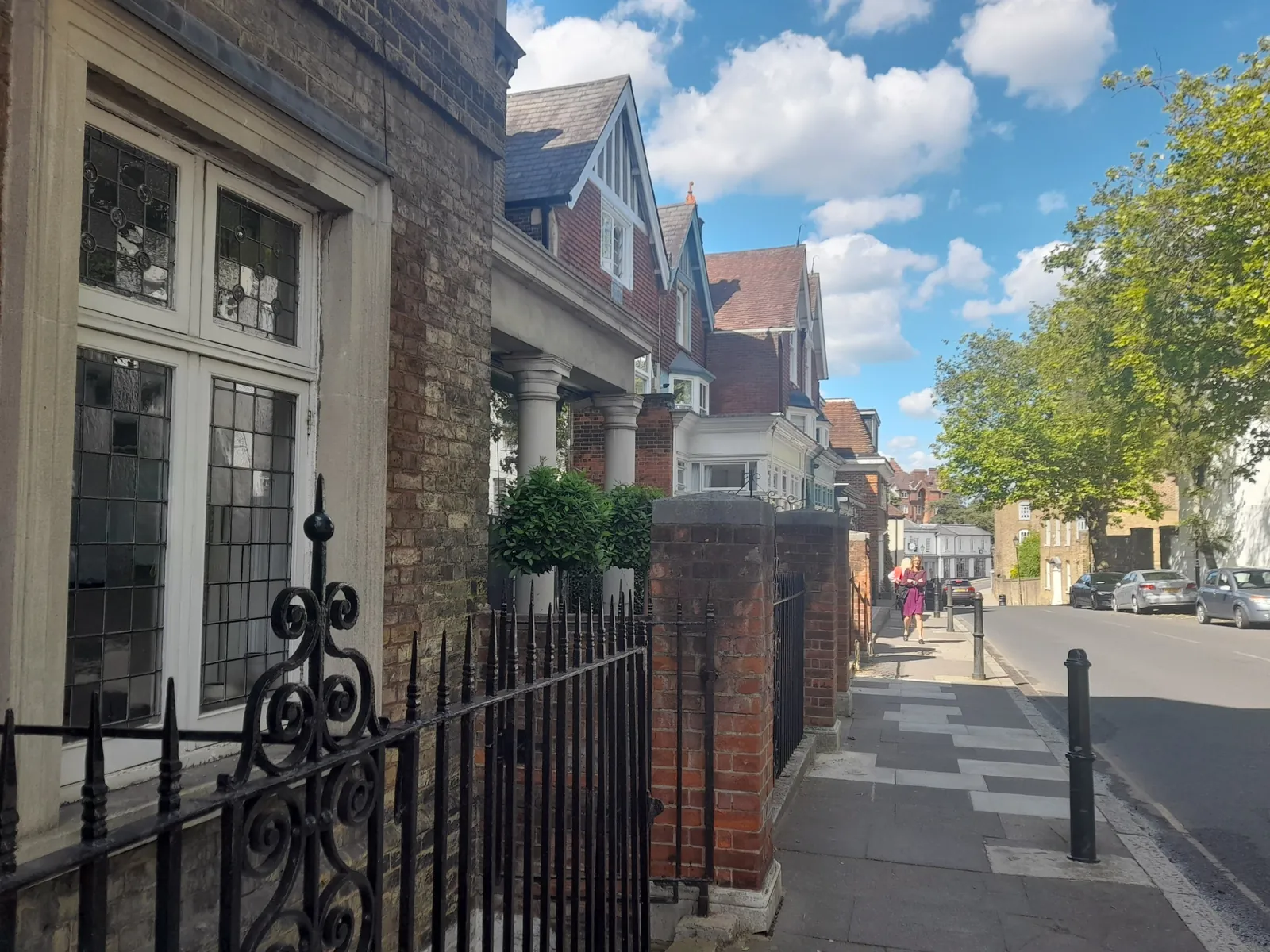
The Harrow on the Hill Conservation Area, Lowlands Recreation Ground, The Grove Open Space and the River Pinn add further habitat around Harrow Town Centre. Bentley Priory and Stanmore are further north and are not treated as if they sat in the town centre; a PEA should identify which surveys the specific site actually needs.
The London Borough of Harrow assesses effects on protected and priority species under Policy GI3 of the Local Plan 2021-2041, adopted on 24 March 2026, together with London Plan Policy G6, published on 2 March 2021. Confirm the current local validation requirements with the council before submitting.
Local plan: Harrow Local Plan 2021-2041 (adopted 24 March 2026) and The London Plan 2021 (published 2 March 2021) (The Harrow Local Plan 2021-2041 was adopted on 24 March 2026 and is the adopted borough development plan as of 13 November 2026, together with the London Plan 2021, published on 2 March 2021. It replaces the 2012 and 2013 plan documents. The draft London Plan 2026 is in consultation and is not adopted. There is no 2027 successor council. The London Borough of Harrow is the local planning authority and the Lead Local Flood Authority.)
GI3: Biodiversity
Requires development proposals, unless exempt under the Environment Act 2021, to contain a biodiversity plan including an appropriate net gain metric, a preliminary ecological assessment where appropriate, and an on- and off-site mitigation and management plan. Proposals must follow the mitigation hierarchy and must not result in loss of, or uncompensated harm to, irreplaceable habitats, designated sites or other important features. Unless exempt, major and minor development must be supported by a Biodiversity Net-Gain Plan demonstrating a minimum of 2 biodiversity units per hectare or a minimum net uplift of 10 per cent, whichever is greater, plus at least one wildlife enhancement per residential dwelling. Following the NPPF published on 17 August 2026, the statutory 10 per cent minimum applies except where a higher figure is justified on a specific site allocation.
GI4: Urban Greening, Landscaping and Trees
Requires a design-led approach that maximises local greening, with a presumption in favour of retaining and integrating existing trees, woodlands and hedgerows. Trees identified for retention must be protected during construction, with appropriate root protection areas. Planning permission will be refused where proposals would result in the loss of or harm to trees subject to a TPO, ancient or veteran trees or woodland, or trees categorised as suitable quality and value in a BS5837 survey. Where tree loss is unavoidable, replacement will be required at a rate of at least two new trees for each tree lost, on site where appropriate, or by a contribution for any shortfall. Major development should meet the London Plan Urban Greening Factor scores of 0.4 for predominantly residential and 0.3 for predominantly commercial development unless it is not feasible.
CN3: Reducing Flood Risk
Requires proposals to apply the sequential and exception tests in line with national policy. Where a flood risk assessment is required, it must show that the development will be resistant and resilient to all relevant sources of flooding including surface water, minimise flood risk on site, not increase flood risk elsewhere, reduce flood risk overall where possible, and provide a dry means of escape. For residential development in Flood Zone 3, finished floor levels must be at least 300 mm above the modelled 1 in 100 year plus climate change flood level. Basement development will not be allowed on sites in Flood Zone 3b, and new dwellings or additional habitable accommodation in basements will be refused. Natural flood management methods should be the preferred approach.
G6: Biodiversity and access to nature
London Plan Policy G6 requires development proposals to manage impacts on biodiversity and aim to secure net biodiversity gain. Sites of Importance for Nature Conservation should be protected. The policy does not set a percentage.
G7: Trees and woodlands
Requires existing trees of value to be retained wherever possible. Where trees are removed, there should be adequate replacement based on the value of the benefits lost, determined by a method such as i-Tree or CAVAT. Additional planting, particularly of large-canopied species, should generally be included.
SI 12: Flood risk management
Requires development proposals to minimise and mitigate flood risk and address residual risk, including, where possible, making space for water and setting development back from watercourses. In London the boroughs are the Lead Local Flood Authorities.
General guidance for protected species survey, not formal advice for your site.
London Borough of Harrow. The London Plan also forms part of the development plan. The borough is the Lead Local Flood Authority. There is no 2027 successor council for this borough.
Depending on the site, further survey may be needed for bats, reptiles or nesting birds, particularly on Harrow on the Hill, along the Wealdstone Brook and toward the Metropolitan Green Belt. A PEA should identify what is actually needed.
Yes, where appropriate and unless the development is exempt under the Environment Act 2021. The preliminary ecological assessment should identify whether further protected species survey is needed.
No other published town guides for this survey in the council area yet.