Featured partner
Recommended for Staines-upon-Thames

ROAVR Group
Tree, ecology, flood risk and topographical surveys for planning applications.
4.9 Google rating
Get a quote
Local experts.
Featured partner
Recommended for Staines-upon-Thames
Tree, ecology, flood risk and topographical surveys for planning applications.
4.9 Google rating
Local experts.
Environmental consultancy founded in 2004, with its head office on the Surrey Research…
Multi-disciplinary practice founded in 1985, offering arboriculture, ecology, landscape…
Independent ecology consultancy with its head office in Leatherhead, Surrey.
Independent ecological consultancy with a Surrey office near Farnham, plus offices in…
North of Staines-upon-Thames, Staines Moor forms part of the South West London Waterbodies SPA, which Policy E2 protects separately from the net gain calculation. A biodiversity net gain assessment still has to use the statutory metric to show how a proposal will leave habitats in a measurably better state. The local planning authority is Spelthorne Borough Council. Policy E2 of the Local Plan 2024-2039/40, adopted on 17 March 2026, seeks at least 10 per cent net gain, delivered first on the site, then as close as possible, and then within the borough where feasible. The Local List of Information Requirements, updated in June 2026, also requires at least 10 per cent biodiversity net gain on site.
Local planning authority: Spelthorne Borough Council
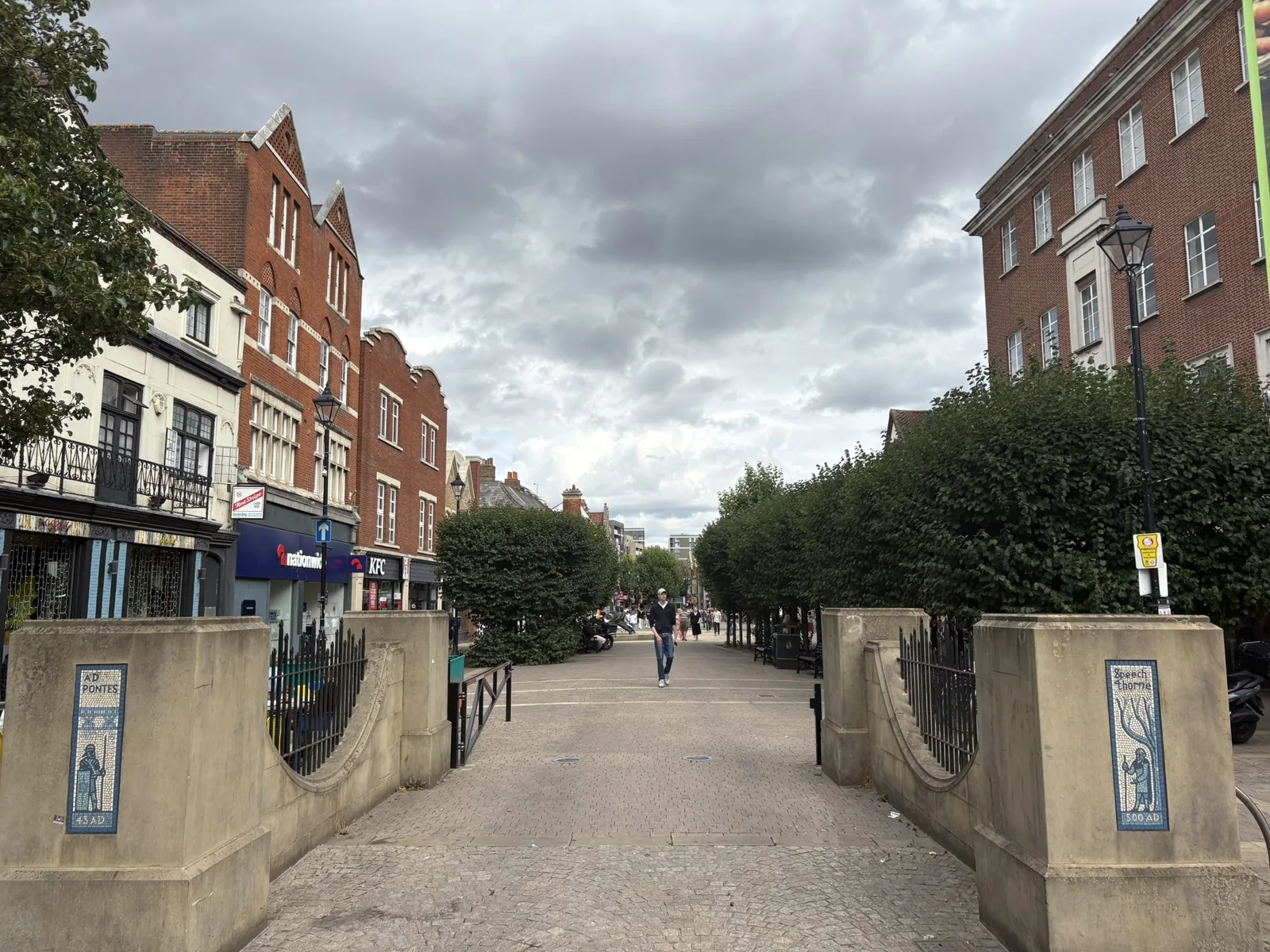
Staines-upon-Thames sits between the River Thames and a network of reservoirs and grazing marsh. Staines Moor and the Wraysbury reservoir network form part of the South West London Waterbodies SPA and Ramsar, important for migrating and over-wintering birds, and lie within the Colne Valley Regional Park. Policy E2 also identifies the Staines Moor to Shortwood Common Biodiversity Opportunity Area. River corridors along the River Thames, River Colne, River Ash and Sweeps Ditch are part of the borough's blue infrastructure. Net gain and Habitat Regulations tests on the SPA are separate requirements.
Spelthorne Borough Council applies Policy E2 of the Local Plan 2024-2039/40, adopted on 17 March 2026, together with the statutory biodiversity net gain duty under the Environment Act 2021. Policy E2 and the Local List of Information Requirements (updated June 2026, Item 38) seek at least 10 per cent net gain on site. Off-site options, where on-site delivery is not feasible, should be as close as possible and, where practical, within the borough. Policy E2 also requires proposals affecting Ramsar, SPA and SSSI units, or non-SPA waterbodies that support the South West London Waterbodies network, to demonstrate no likely significant effects. Confirm the current list and metric requirements with the council before submitting.
Local plan: Spelthorne Local Plan 2024-2039/40 (Adopted at Extraordinary Council on 17 March 2026. The Local List of Information Requirements was updated in June 2026.)
SP5: Colne Valley Regional Park
Policy for the Colne Valley Regional Park, covering the Colne corridor and Staines Moor to the north of the town.
SP1: Staines-upon-Thames
Area strategy for the borough's main town centre. Requires flood risk management and green and blue infrastructure to be incorporated where appropriate, and expects development affecting the Staines Conservation Area or the river frontage to respect and enhance that character. Supports riverside public realm, landscaping and SuDS.
E1: Green and Blue Infrastructure
Requires all development to contribute to the green and blue infrastructure network at a commensurate scale. Proposals on or adjacent to a watercourse or reservoir must protect and enhance ecological, flood risk, landscape and recreational value, consistent with the Water Framework Directive.
E2: Biodiversity
Supports habitat connectivity and habitat creation, particularly in Biodiversity Opportunity Areas including Staines Moor to Shortwood Common. Seeks at least 10 per cent biodiversity net gain, delivered first on site, then close to the site, then within the borough where feasible. Protects Ramsar, SPA and SSSI units forming the South West London Waterbodies network, and local SNCIs, LNRs, ancient and veteran trees and TPOs.
E3: Managing Flood Risk
Guides development to the lowest flood risk from all sources through the sequential test, with the exception test where national policy requires it. Requires SuDS unless they are not appropriate, greenfield runoff rates on new development, and site-specific flood risk assessment in Flood Zones 2 and 3a and on dry islands, including safe access and egress and climate change. Safeguards the River Thames Scheme channel through the borough. Basement extensions and conversions to a higher vulnerability in the floodplain are not permitted.
PS3: Heritage, Conservation and Landscape
Seeks to preserve and enhance architectural, historic and landscape character. Includes conservation areas, listed buildings, archaeology, and the effective use of Tree Preservation Orders to protect significant trees, with replacement required if a protected tree has to be felled. The June 2026 Local List cites Policy PS3 as the driver for tree surveys.
SP6: River Thames and its Tributaries
Protects the setting of the River Thames and the Rivers Ash, Colne and Wraysbury. Requires no new culverting, retained natural banks, undeveloped buffer zones of at least 8 m for main rivers and 5 m for other watercourses (including culverted rivers), and supports the River Thames Scheme, including a new footpath connection at Laleham.
General guidance for biodiversity net gain (bng), not formal advice for your site.
Spelthorne Borough Council. From 1 April 2027 planning powers pass to the new West Surrey unitary council under local government reorganisation.
Yes, for qualifying applications. Policy E2 and the June 2026 Local List seek at least 10 per cent net gain on site, unless a scheme is exempt under the Environment Act 2021. Confirm the current validation requirements with the council.
Policy E2 does not permit development not directly related to the management of Ramsar, SPA and SSSI units unless it is demonstrated that the proposal, alone or in combination, will not result in likely significant effects. The same test applies to non-SPA waterbodies that support the wider network. This is in addition to biodiversity net gain.