Featured partner
Recommended for Brixton

ROAVR Group
Tree, ecology, flood risk and topographical surveys for planning applications.
4.9 Google rating
Get a quote
Local experts.
Featured partner
Recommended for Brixton
Tree, ecology, flood risk and topographical surveys for planning applications.
4.9 Google rating
Local experts.
Environmental and ecology consultancy with a London office at Holyrood Street, near…
London environmental consultancy based at Marshalsea Road, Southwark, formerly trading…
Independent ecology consultancy with its head office in Leatherhead, Surrey.
Environmental consultancy founded in 2004, with its head office on the Surrey Research…
Brockwell Park and Rush Common are an important part of the setting for a biodiversity net gain assessment in Brixton. The assessment uses the statutory metric to show how a proposal will secure a measurable gain. The local planning authority is the London Borough of Lambeth. Policy EN1 of the Lambeth Local Plan, adopted on 22 September 2021, requires development to protect, enhance, create or manage biodiversity in accordance with London Plan Policy G6 and the borough's Biodiversity Action Plan. It does not set a percentage above the national minimum. After the National Planning Policy Framework published on 17 August 2026, qualifying applications are assessed against the statutory 10 per cent minimum except on a justified site allocation. The London Plan was published on 2 March 2021 and also forms part of the development plan.
Local planning authority: London Borough of Lambeth
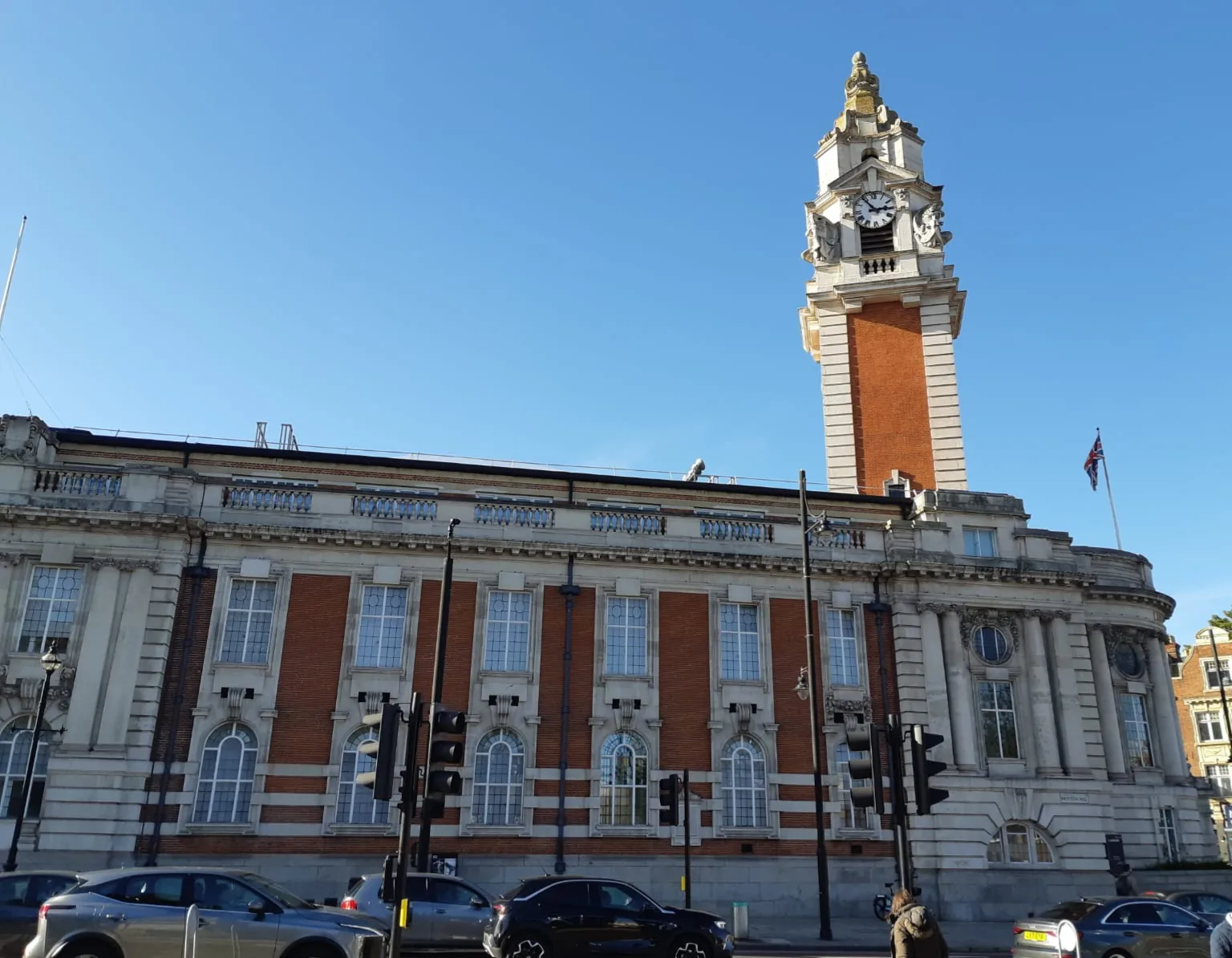
Brockwell Park is a registered historic park immediately south of Brixton Town Centre. Rush Common is historic common land toward Brixton Hill. A net gain assessment should be read alongside any preliminary ecological appraisal of those spaces, and should not treat the Thames tidal floodplain in the north of the borough as if it ran through the town centre.
The London Borough of Lambeth assesses biodiversity net gain under Policy EN1 of the Lambeth Local Plan, adopted on 22 September 2021, together with the Environment Act 2021 and Policy G6 of the London Plan, published on 2 March 2021. Policy EN1 does not set a local percentage above 10 per cent, so the statutory minimum applies except on a justified site allocation. The Local Information Requirements 2024 require a biodiversity net gain plan for applications that are not exempt, based on the statutory metric. Confirm the current local validation requirements with the council before submitting.
Local plan: Lambeth Local Plan 2020–2035 (adopted 22 September 2021) and The London Plan 2021 (published 2 March 2021) (The Lambeth Local Plan 2020–2035 was adopted on 22 September 2021 and remains the adopted borough development plan as of 13 November 2026, together with the London Plan 2021, published on 2 March 2021. The draft London Plan 2026 is in consultation and is not adopted. There is no 2027 successor council. The London Borough of Lambeth is the local planning authority and the Lead Local Flood Authority.)
EN1: Open space, green infrastructure and biodiversity
Protects open space, green infrastructure and the nature conservation or biodiversity value of designated sites, including Local Nature Reserves and Sites of Importance for Nature Conservation. In accordance with London Plan Policy G6, development should protect, enhance, create or manage biodiversity in line with the borough's Biodiversity Action Plan.
EN5: Flood risk
Applies a sequential, risk-based approach to the location of development and requires a flood risk assessment for major development in Flood Zone 1, for all development in Flood Zones 2, 3a and 3b, or where the site may be subject to other sources of flooding. Assessments must consider all sources, including tidal, fluvial, surface water, groundwater, sewer and reservoir flooding, and take account of climate change.
EN6: Sustainable drainage systems and water management
Requires sustainable drainage so that development does not increase flood risk and, where possible, reduces it, delivering water quality, amenity and biodiversity benefits in line with the drainage hierarchy.
Q10: Trees
Requires new development to take particular account of existing trees on the site and on adjoining land, and will not permit the loss of, or a threat to, trees of significant amenity, historic or ecological value, including veteran trees. Layouts should be informed by arboricultural survey and tree constraints information, with adequate replacement planting, using tools such as i-tree or CAVAT, where removal is imperative.
General guidance for biodiversity net gain (bng), not formal advice for your site.
The London Borough of Lambeth. The London Plan also forms part of the development plan. The borough is the Lead Local Flood Authority. There is no 2027 successor council for this borough.
No sourced higher adopted standard applies. Policy EN1 requires biodiversity to be protected and enhanced. After the National Planning Policy Framework published on 17 August 2026, qualifying applications are assessed against the statutory 10 per cent minimum except on a justified site allocation.
Yes. The London Plan, published on 2 March 2021, forms part of the development plan. Policy G6 deals with biodiversity alongside Policy EN1.